
5-Day Kilimanjaro Climb, Marangu Route
- Mount Kilimanjaro
Tour Overview
The Marangu Route is the most popular and budget-friendly route for climbing Kilimanjaro. Because of its popularity, it can get busy during peak seasons, especially from July to September and December to March. The 6-day itinerary is strongly recommended over the 5-day option, as it offers better acclimatization and increases your chances of reaching the summit comfortably.
The Marangu Route often called the “Coca-Cola Route,” Marangu is the only route where trekkers sleep in mountain huts instead of tents, making it a great choice during the rainy season. The route passes through all of Kilimanjaro’s climate zones, from tropical rainforest to alpine desert and icy summit, offering a rich variety of landscapes and wildlife. You’ll find many videos and photos of this route online, showcasing its beauty and accessibility.
Both 5-day and 6-day programs are available, depending on your schedule. However, longer treks are always recommended to help your body adjust to the altitude.
5-Day Kilimanjaro Climbing, Marangu Route Itinerary
Distance: 8 km (Approximately)
Hiking Time: About 5 hours
Habitat: Rainforest
Meals: Breakfast, lunch, and dinner
Accommodation: Mandara Hut
After breakfast, you’ll be picked up from your hotel around 8:00 a.m. and driven to Marangu Gate. Once registration is complete, your trek begins! The trail winds through lush rainforest, where you may spot blue monkeys and Colobus monkeys playing in the trees.
After about 5 hours of walking, you’ll arrive at Mandara Hut (2,700 m), your first overnight stop. The huts offer simple, shared accommodation with bunk beds and a warm meal to end the day.
Please Note: Take your time on this first day, it’s a gentle introduction to the mountain. Enjoy the forest sounds, stay hydrated, and let your body ease into the rhythm of the trek.
Distance: 12 km
Hiking Time: About 6–8 hours
Habitat: Moorland
Meals: Breakfast, lunch, and dinner
Accommodation: Horombo Hut
After breakfast, you’ll begin your trek toward Horombo Hut, gradually leaving the rainforest behind and entering the open moorland. The trail climbs steadily, offering wide views and fresh mountain air.
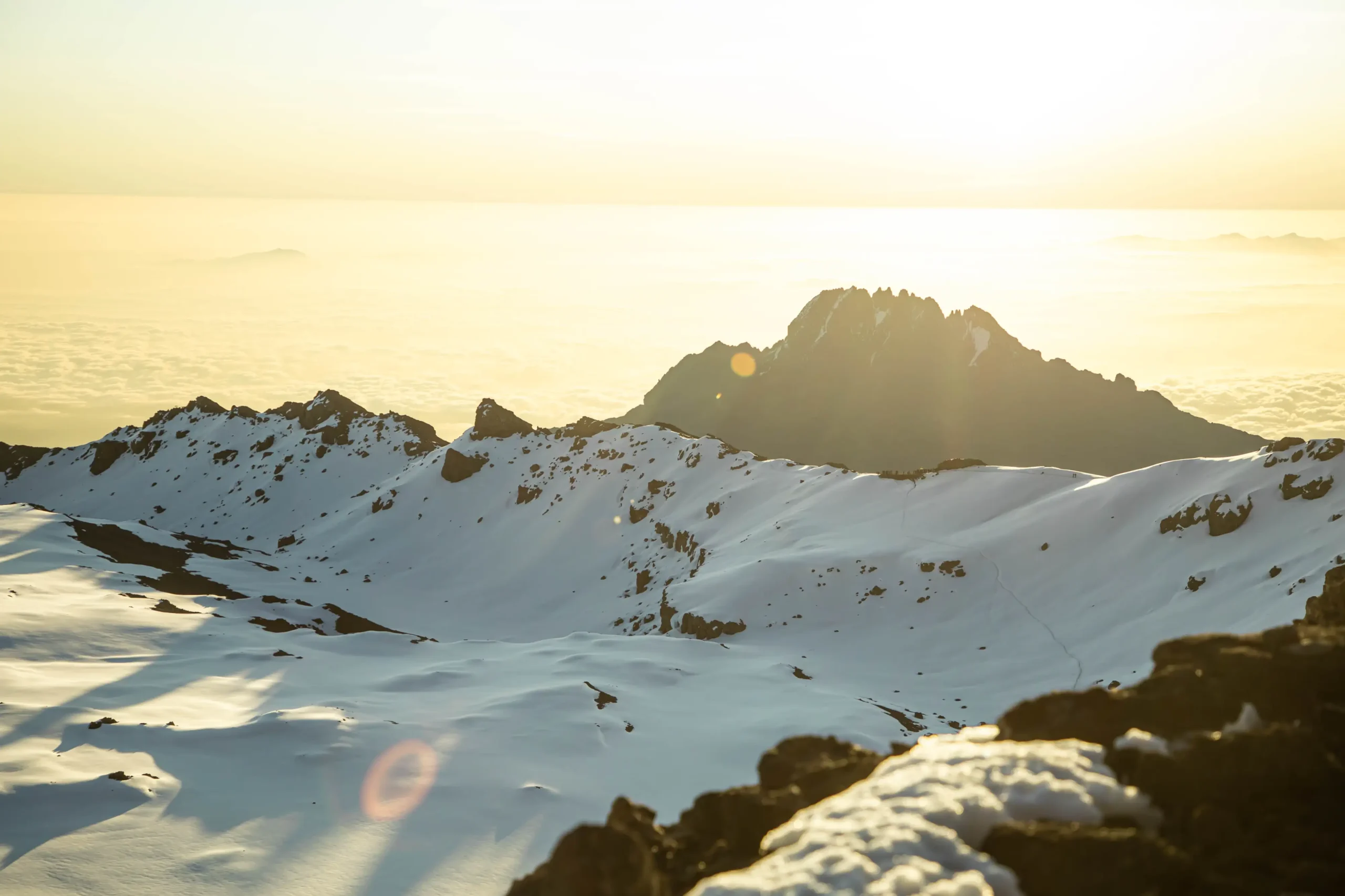
After about 6–8 hours of walking, you’ll reach Horombo Hut (3,720 m), where you’ll settle in for the night. From here, you’ll enjoy stunning views of both Kibo Peak and Mawenzi Peak, two of Kilimanjaro’s iconic summits.
Please Note: This is a longer day, so pace yourself and take breaks when needed. The change in scenery is dramatic, be careful for giant rocks and other high-altitude plants as you climb.
Distance: 9 km
Hiking Time: About 5 hours
Habitat: Alpine desert
Meals: Breakfast, lunch, and dinner
Accommodation: Kibo Hut
After breakfast, you’ll begin your trek toward Kibo Hut, the final base before summit night. The trail starts with gentle terrain, but soon the landscape shifts dramatically—vegetation fades and the path opens into a vast, rocky saddle between Mawenzi and Kibo Peaks.
After lunch, you’ll cross this wide, barren stretch, with views of the summit trail ahead. The terrain feels almost lunar, with dry air and sweeping silence. You’ll arrive at Kibo Hut (4,700 m) in the afternoon, where you’ll rest, eat an early dinner, and prepare for the midnight ascent to Uhuru Peak.
Please Note: This is a quiet, reflective day. The summit is now in sight, and your body needs rest. Stay warm, hydrate well, and get as much sleep as possible, your climb to the top begins tonight.
Distance: 21 km
Hiking Time: About 13 hours
Meals: Breakfast, lunch, and dinner
Accommodation: Kibo Hut
Today is summit day, the most anticipated and emotional part of your journey. You’ll wake up at 1:00 a.m. and begin your climb under the stars. The trail is steep and quiet, and after 4–5 hours, you’ll reach Gilman’s Point (5,681 m) on the crater rim, just as the sun begins to rise over the mountain.
From there, it’s another 1.5 hours to Uhuru Peak (5,895 m), the highest point in Africa. You’ll have time to take photos, celebrate, and soak in the amazing sunrise over the continent.
Afterward, you’ll descend back to Kibo Hut for a warm lunch and a short rest. Then you’ll continue down to Horombo Hut, where you’ll spend your final night on the mountain.
Please Note: This is a long and demanding day, both physically and emotionally. Dress warmly, follow your guide’s pace, and take it one step at a tim
Distance: 21 km
Hiking Time: About 6–7 hours
Habitat: Moorland → Rainforest
Meals: Breakfast, lunch, and dinner
Accommodation: Hotel in Arusha / Moshi (after descent)
After an early breakfast, you begin your final descent from Horombo Hut, passing through open moorland and heading toward Mandara Huts. You’ll stop here for a hot lunch and a short rest.
From Mandara, the trail continues down through the lush rainforest, where the air becomes warmer and the vegetation thicker. After reaching Marangu Gate (1,860 m), you’ll receive your summit certificate and be transferred back to your hotel in Arusha or Moshi.
Please Note: This is a joyful day of reflection and celebration. Take your time, enjoy the changing scenery, and enjoy the feeling of accomplishment, you’ve completed one of the world’s great trekking adventures.
Your 5-day Marangu Route adventure ends with a safe descent and a comfortable transfer back to your hotel in Arusha or Moshi. Reaching the summit of Mount Kilimanjaro, Africa’s highest peak, is a truly unforgettable accomplishment, and we’re proud to have shared this journey with you.
Thank you for choosing to climb with us. May the memories of Kilimanjaro stay with you always, and may the spirit of the mountain continue to inspire your path forward.
| 1 Pax | 2 Pax | 3 Pax | 4 Pax | 5 Pax | Number of People |
|---|---|---|---|---|---|
| $1,592 | $1,361 | $1,290 | $1,237 | $1,220 | Price Per Person |
| Here are some important things to know and prepare before your climb. These tips will help you stay safe, respectful, and ready climb Mount Kilimanjaro with a full confidence. | |
| Recommended Gear to Rent | Sleeping bag (rated for -10°C), trekking poles, waterproof duffel, gaiters, headlamp |
|---|---|
| Health & Altitude Tips | Acclimatize slowly, drink 3–4L water daily, carry Diamox if needed, avoid alcohol |
| Visa & Entry Info | Tourist visa required for most nationalities; available online or on arrival at airport |
| Local Etiquette | Greet with “Jambo,” dress modestly in towns, tipping guides/porters is customary |
| Photo Tips | Capture sunrise at Stella Point, wide shots at Shira Plateau, and summit flags at Uhuru Peak |
| If you're interested in gear add-ons, please let us know in advance so we can prepare everything before your climb. | |
| Add-on | Price (USD) |
|---|---|
| Private Toilet | $150 |
| Private Tent | $7/day |
| Kailas X3 III Alpine Tent with Vestibule | $12/day |
| Thicker Sleeping Mattress (4-inch foam) | $10 |
| Thermosets | $17 |
| We offer airport pickup and drop-off services from Kilimanjaro International Airport (JRO) or Arusha Airport. Please confirm your flight details in advance so we can coordinate your arrival and departure smoothly. | |
| Airport Pickup | Available on request |
|---|---|
| Transfers to/from Hotel | Included in most packages |
| Private Vehicle Upgrades | Available for an extra charge |
| Tipping is customary and greatly appreciated by the crew. Below are suggested amounts based on group size and duration. | |
| Lead Guide | $20–25 per day |
| Assistant Guide | $15–20 per day |
| Cook | $10–15 per day |
| Porter | $8–10 per day |
| Tips are usually collected and distributed at the end of the trek. You can give them in cash (USD or Tanzanian Shillings) or through a group representative. | |
Inclusions
What's Included
- All transfers are as per the itinerary and government expenses.
- All accommodation during your climb(Unless listed as upgrade)
- All Kilimanjaro Park fees.
- Trained guides in altitude physiology and wilderness first responder (WFR).
- Top-quality food for the duration of the climb, considering maximum nutritional needs. Three meals a day.
- Safety equipment, including an oxygen tank and portable altitude chamber (PAC) for the entire climb.
- Camping equipment, including top-quality mountain tents and standard bathroom facilities.
- Safety communication, such as satellite phones and cell phones.
- Flying Doctors Evacuation within the area.
- Mattresses, and tents.
What's Excluded
- International flights (From/to your home country)
- Tips for your guide, cook and crew.
- Personal items (Souvenirs, travel insurance, visa fees, etc.)
- Government-imposed increase of taxes and/or park fees
- Extra accommodation before and after tour
- Beverages, laundry, personal gear or clothing rental, etc.
- Extra activities not mentioned on the itinerary
- Any charges resulting from an early descent, such as additional hotels, transfers, etc. (This applies if a guest descends before finishing the climb.)
5-Day Kilimanjaro Climb, Marangu Route
Group size: 1–12 climbers
Private or group departures available
Why Travel With Us
- 100% Tailor-Made Trips
- Expert Local Knowledge
- Trusted & Reliable Service
- Experienced Mountain Guides
- Best Price Guarantee
- 24/7 Customer Support
- No Booking Fees
- Secure & Safe Travel
| Route Name | Marangu Route |
|---|---|
| Duration | 5 Days / 4 Nights |
| Hiking Time | 6–8 hours per day (longer on summit day) |
| Distance | About 62 km (38.5 miles) |
| Elevation Range | 1,800 m – 5,895 m |
| Climate Zones | Rainforest → Moorland → Alpine Desert → Arctic |
| Difficulty | Moderate |
| Success Rate | High, about 85–90% |
| Minimum Age | 10 years |
| Accommodation Type | Mountain huts with bunk beds |
| Summit Start Time | Midnight from Kibo Hut |
| Route Type | Out-and-back (same trail for ascent and descent) |
| Best Season | Jan–Mar & Jun–Oct |
|---|---|
| Accommodation | Mountain huts with bunk beds |
| Meals | Breakfast, lunch & dinner |
| Guide & Crew | Professional guides, cooks & porters |
| Start Point | Marangu Gate (1,800 m) |
| End Point | Marangu Gate (1,800 m) |
| Airport Pickup | Available on request |
| Includes | Park fees, hut accommodation, meals, guides |
| Excludes | Flights, visas, tips, personal gear |
Request a Quote
Contact Information
Looking for a Tanzania safari? Talk to our Tanzania expert and plan your perfect trip!
- +255 766 633 052
- +255 626 058 246
- info@exceptionaltravelexpert.com

Other Recommended Kilimanjaro Routes
Looking for a different routes to climb Kilimanjaro? There are several routes to choose from. Each one offers its own views, pace, and experience. Some are quieter, some give more time to adjust to the altitude, and some are quicker to the summit. You can pick the route that fits your style best. Here are a few other popular options that many guests enjoy.
- 7D 6N
- 2 Person
- Trekking
- 7D 6N
- 2 Person
- Trekking
- 7D 6N
- 2 Person
- Trekking
- 6D 5N
- 2 Person
- Trekking
Are you looking for a private safari for your dates? Speak to our Tanzania safari specialist to start planning your tailor-made holiday safari for your dates!
Send your inquiry now and our safari experts will reach out within 24 hours! Let’s begin planning your Tanzania safari!

FAQs
Frequently asked questions about Tanzania Safaris
FAQ: GET ANSWERS
Tanzania has amazing places to visit like Serengeti National Park, Ngorongoro Crater, Mount Kilimanjaro, Zanzibar Island, Lake Eyasi, Lake Natron, Ruaha National Park, Mikumi National Park, Arusha National Park, Mount Meru, Lake Manyara National Park, and Tarangire National Park.
You can see all the big 5 animals, like lions, elephants, buffaloes, leopards, and rhinos, plus lots of others like giraffes, zebras, and hippos.
Yes! Many places are great for families, with fun activities for kids. It’s an amazing experience for children to see wild animals up close and it’s guaranteeing safe.
Most people need a visa. You can get it when you arrive in Tanzania, but check the rules for your country.
Talk to a doctor before you go. They’ll tell you if you need yellow fever vaccines or medicine for things like malaria. Note yellow fever vaccines is recommended in Tanzania.
Swahili and English are spoken. You can get by with English, but learning some Swahili phrases is helpful.
Yes, Tanzania is usually safe for tourists, especially in popular safari destinations and attractions. Just follow the rules and be respectful.
You can stay in budget hotels, mid-range lodges, luxury mid-range hotels, luxury hotels, luxury lodges, and tented camps. There are various accommodations options you will find in Tanzania!
FAQ: GET ANSWERS
Go from June to October, when it’s dry. Animals gather around water, so it’s easier to spot them. But if you like green landscapes, go from November to May, when it’s wet. All seasons have an incredible and a wonderful experience
Bring light clothes, safari boots, a hat, sunscreen, bug spray, binoculars, a camera, and any medicine you need. And most importantly, be ready for a memorable adventure!
Most safaris last from 3 to 7 days. This gives you time for seeing animals, relaxing, and learning about the Tanzania culture.
Yes! You can go to Zanzibar for beach vacation, climb Mount Kilimanjaro, or visit Ngorongoro and Serengeti to see all big 5 animals at once.
Yes, you can go on a safari even if you have a disability. Many safari places are accessible by vehicles and places to stay that are easy to use. They make sure everyone can enjoy the safari, even if they have disabilities or find it hard to move.
Tanzania has amazing 22 national parks, more than 12 game reserves, Mount Kilimanjaro, Mount Meru, Mount Oldoinyo Lengai, Lake Eyasi, Lake Natron, Zanzibar Island. It’s a special place for a safari adventure!
You can book through travel companies or directly with lodges and camps. Make sure to read reviews and choose a trusted place.
The Great Wildebeest Migration is a massive movement of wildebest and zebra in from Serengeti to Maasai Mara in Kenya. It starts in the southern Serengeti in Tanzania around December and heads north Serengeti across to the Maasai Mara river in Kenya by July. Then, it goes back to the Serengeti by October. You can witness it from December to July in Tanzania and from July to October in Kenya.
You can use safari vehicles for game drives. Some places offer walking safaris or hot air balloon rides for a different experience.