
Kilimanjaro Altitude Sickness: Symptoms, Prevention and Treatment
Kilimanjaro Altitude Sickness: Symptoms, Prevention and Treatment
Altitude sickness is the number one reason climbers do not reach the summit of Kilimanjaro. Not lack of fitness. Not bad weather. Altitude. And yet many climbers arrive on the mountain without really understanding what altitude sickness is, how to spot it, or what to do when it happens.
This page changes that. We cover everything you need to know in plain, simple language, about altitude sickness on Kilimanjaro. What it is, why it happens, what the symptoms look like at every stage, how to prevent it, whether you should take Diamox, and exactly what our guides do to keep you safe.
Exceptional Travel Expert is based in Arusha, Tanzania, right at the foot of Kilimanjaro. We run climbs every month of the year. Our guides are professionally trained in high-altitude health and wilderness first aid. If you have specific questions about your health before a climb, contact our team here and we will help.
Download Your Free Kilimanjaro Packing Checklist
This comprehensive checklist includes everything on this page in an easy-to-print format you can use while packing. Simply check off items as you pack them to ensure nothing is forgotten.
What Is Altitude Sickness?
Altitude sickness happens when your body does not get enough oxygen. As you climb higher, the air becomes thinner. There are fewer oxygen molecules in every breath. At sea level, the air pressure is 101 kPa. At Kilimanjaro’s summit (5,895 metres / 19,341 feet), it is roughly half that around 47 kPa. Each breath at the summit delivers about half the oxygen your body is used to.
Your body can adapt to this a process called acclimatization but it takes time. When you climb too fast and do not give your body enough time to adjust, the result is altitude sickness. The medical name is Acute Mountain Sickness, or AMS. If AMS is ignored and the climber continues to ascend, it can develop into two very serious and potentially life-threatening conditions: HACE (fluid on the brain) and HAPE (fluid in the lungs).
Understanding the difference between mild, moderate, and severe altitude sickness and knowing when to act is the most important knowledge you can have on Kilimanjaro.
Who Gets Altitude Sickness on Kilimanjaro?
This is one of the most important things to understand: anyone can get altitude sickness. It does not matter how fit you are, how young you are, or how experienced a hiker you are. There is no way to predict with certainty who will be affected.
Studies estimate that around 75% of Kilimanjaro climbers experience some symptoms of AMS during their climb. For the majority, these are mild a headache, some nausea, and disturbed sleep. For a smaller number, symptoms are serious enough to require descent. Every year, some climbers develop HACE or HAPE and require emergency evacuation.
What we do know is that certain factors increase the risk:
- Going too fast: Ascending rapidly is the primary cause of altitude sickness. Choosing a short route dramatically increases your risk.
- Previous altitude sickness: If you have had it before, you are more likely to get it again at a similar altitude.
- Dehydration: Being dehydrated makes all altitude sickness symptoms worse.
- Alcohol: Alcohol dehydrates you, disrupts sleep, and impairs acclimatization. Avoid it completely on the mountain.
- Overexertion: Pushing too hard early in the climb exhausts your body and makes it harder to acclimatize.
The good news is that you have significant control over most of these factors. The right route, the right pace, and the right preparation can dramatically reduce your risk.
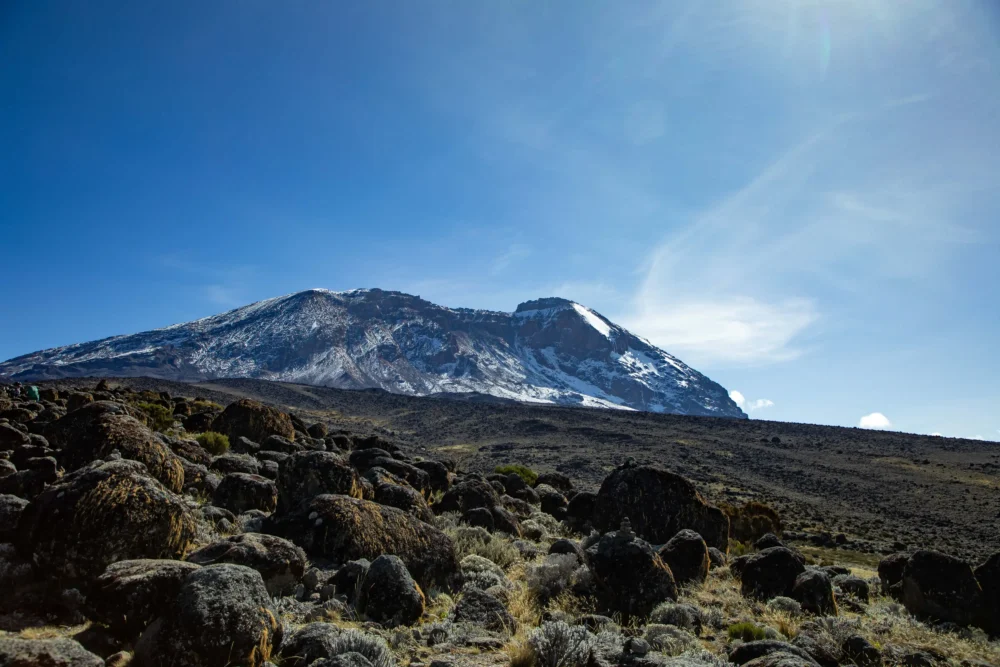
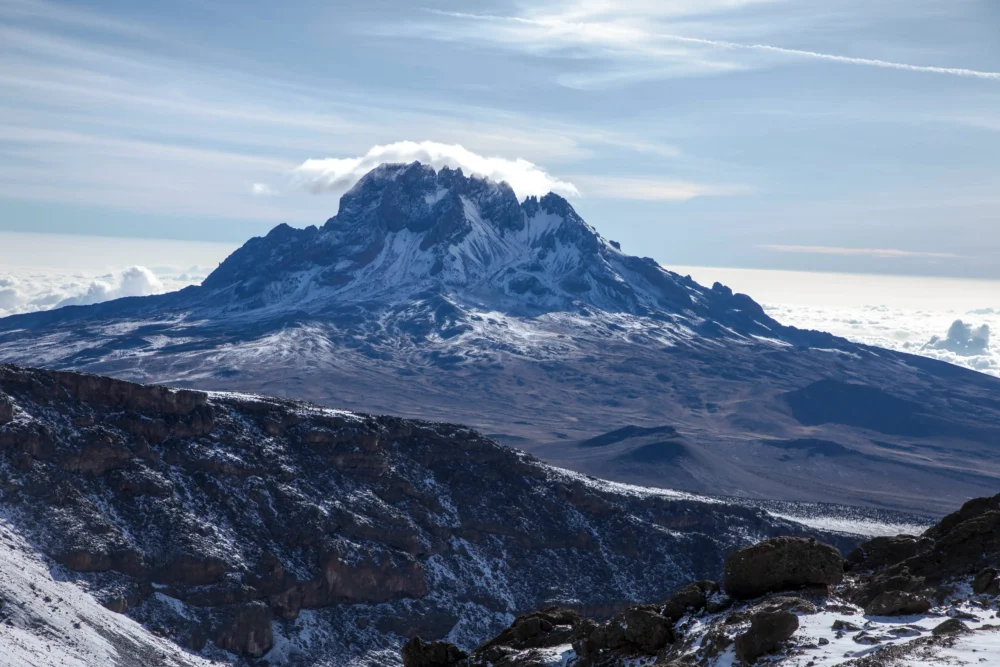
Altitude Zones on Kilimanjaro — Where the Risk Increases
Kilimanjaro rises through several distinct altitude zones, each with its own risks. Here is a simple guide to what happens to your body as you climb:
| Altitude zone | Location on mountain | What to expect |
|---|---|---|
| Below 2,500m | Rainforest / low moorland | Altitude is not a significant concern here. Focus on pace and hydration. |
| 2,500m – 3,500m | Shira Plateau / Horombo Huts | Mild AMS symptoms may begin for some people. Headaches and disturbed sleep are common. Monitor closely. |
| 3,500m – 4,500m | Lava Tower / Kibo Huts area | Most AMS symptoms appear in this zone. Acclimatisation days like the Lava Tower walk are built into good routes here. |
| 4,500m – 5,500m | Crater Camp / summit approach | High-risk zone. HACE and HAPE risk increases significantly. All climbers must be monitored closely. |
| 5,895m | Uhuru Peak — summit | Air has approximately 50% of sea-level oxygen. Most climbers feel breathless, some feel very unwell. Guides assess all climbers before descent. |
Kilimanjaro Altitude Sickness Symptoms — From Mild to Severe
There are three levels of altitude sickness to understand. Knowing the difference is critical mild AMS is manageable, but HACE and HAPE are medical emergencies.
Level 1: Mild AMS — Acute Mountain Sickness
Mild AMS is very common on Kilimanjaro. It usually begins within a few hours of reaching a new altitude and feels, in many ways, like a bad hangover. It is unpleasant but not dangerous if recognised and managed correctly.
Symptoms of mild AMS:
- Headache – The most common and usually the first symptom
- Nausea, sometimes vomiting
- Loss of appetite
- Fatigue and weakness – feeling more tired than usual
- Dizziness or lightheadedness
- Difficulty sleeping or very poor sleep quality
- Shortness of breath during exertion (this is normal at altitude; shortness of breath at rest is not)
What to do: Stop ascending. Rest. Drink water. If symptoms do not improve after 12–24 hours of rest at the same altitude, do not go higher. If symptoms worsen, descend.
Note: A headache alone, without other symptoms, is very common and does not necessarily mean serious AMS. Drink water, take paracetamol if needed, and monitor carefully.
Level 2: Moderate AMS
If mild symptoms get worse rather than better, or if they persist, you are moving into moderate AMS territory. This requires action.
Symptoms of moderate AMS:
- Severe headache that does not respond to paracetamol or ibuprofen
- Persistent nausea and vomiting
- Extreme fatigue – unable to perform normal activity
- Noticeable breathlessness with only mild exertion
- Decreased coordination or feeling unsteady
What to do: Descend immediately. Even 300–500 meters of descent often brings significant and rapid relief. Do not wait to see if symptoms improve. Do not continue ascending under any circumstances.
Level 3: Severe Altitude Sickness — HACE and HAPE
This is the dangerous stage. HACE (High Altitude Cerebral Edema) and HAPE (High Altitude Pulmonary Edema) are medical emergencies. Both are caused by fluid build-up in the brain and lungs respectively. Both require immediate descent and, in serious cases, emergency evacuation.
HACE — High Altitude Cerebral Edema (fluid on the brain):
- Severe, persistent headache that does not improve
- Confusion, disorientation, or unusual behaviour – the person may seem drunk
- Loss of coordination – cannot walk in a straight line (the “heel-toe” test is used to check this)
- Extreme drowsiness – difficult to wake or keep alert
- In advanced cases, loss of consciousness
HAPE — High Altitude Pulmonary Edema (fluid in the lungs):
- Breathlessness even while completely at rest
- Gurgling or crackling sounds when breathing
- Persistent, dry cough – sometimes producing pink or frothy fluid
- Blue or grey colour in lips and fingertips (cyanosis)
- Rapid heart rate combined with very low blood oxygen on pulse oximeter
What to do: Descend immediately. Do not wait until morning. Do not wait for the weather to improve. Descent is the only effective treatment. Every minute matters. Our guides carry emergency oxygen and are trained to recognise these signs and act without delay.
Remember: HACE and HAPE can progress from mild warning signs to a life-threatening situation in a matter of hours. If you are unsure whether a symptom is serious, treat it as serious. It is always better to descend and recover than to wait and deteriorate.
How Guides Assess Altitude Sickness: The Lake Louise Score
Our guides use a standard medical assessment system called the Lake Louise Score to evaluate each climber’s condition at camp every morning and evening. This is a simple questionnaire that scores five symptoms on a scale of 0–3:
- Headache
- Nausea / vomiting
- Fatigue / weakness
- Dizziness
- Difficulty sleeping
A total score of 3 or above (with headache present) indicates AMS. A score of 5 or above, or any signs of HACE or HAPE, triggers immediate action. This systematic approach means that problems are caught early — before they become serious.
In addition, our guides use a pulse oximeter to measure blood oxygen saturation (SpO2) for every climber at every camp. A healthy SpO2 at sea level is 95–100%. On Kilimanjaro, readings of 80–90% are common and expected. A sudden or significant drop below the expected level for that altitude is a warning sign that requires immediate assessment.
How to Prevent Altitude Sickness on Kilimanjaro
There is no guaranteed way to prevent altitude sickness but there are very effective ways to significantly reduce the risk. Here is what works:
1. Choose a Longer Route
This is the single most important decision you can make. The more days you spend on the mountain, the more time your body has to acclimatize. We strongly recommend routes of seven days or more.
| Route | Days | Acclimatisation | Summary |
|---|---|---|---|
| 8-Day Lemosho Our top recommendation | 8 | ★★★★★ | Best overall. Highest summit success rates of any route. |
| 7-Day Lemosho | 7 | ★★★★ | Excellent choice with a very good acclimatisation profile. |
| 7-Day Machame | 7 | ★★★★ | Popular and well-acclimatised. A great option for most people. |
| 7-Day Rongai | 7 | ★★★★ | Quieter northern approach with solid acclimatisation. |
| 6-Day Marangu | 6 | ★★ | Less time to adjust. Lower summit success rate. Not ideal if altitude sickness is a concern. |
| 6-Day Umbwe | 6 | ★ | Steepest and fastest ascent. Highest altitude sickness risk. Experienced climbers only. |
See our full Kilimanjaro Routes guide for a detailed comparison of every route.
2. Go Slowly — Pole Pole
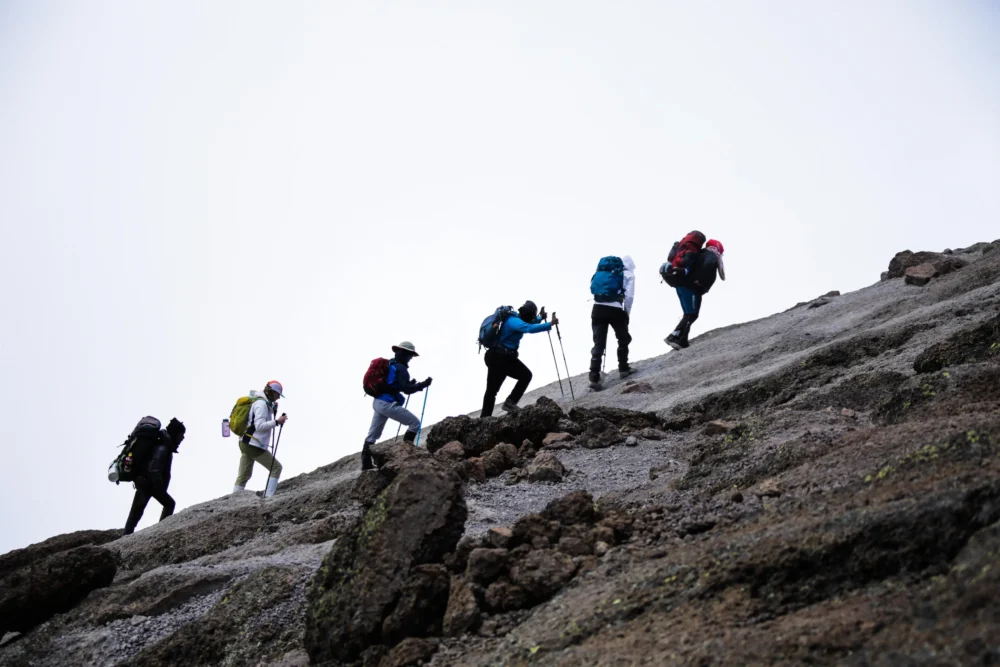
“Pole pole” (pronounced poh-lay poh-lay) means “slowly, slowly” in Swahili. It is the most important phrase on Kilimanjaro. Your guides will say it constantly. It is not just motivational talk it is sound medical advice.
Walking too fast is one of the most common mistakes on Kilimanjaro. Even fit, experienced hikers make it. When you walk too fast at altitude, your body cannot keep up with the oxygen demand, your heart rate rises, and you begin to exhaust yourself. Walking at a slow, measured, steady pace slower than feels natural allows your body to stay within its aerobic limits, conserve energy, and acclimatize as you go.
A simple test: if you cannot hold a normal conversation while walking, you are going too fast.
3. Climb High, Sleep Low
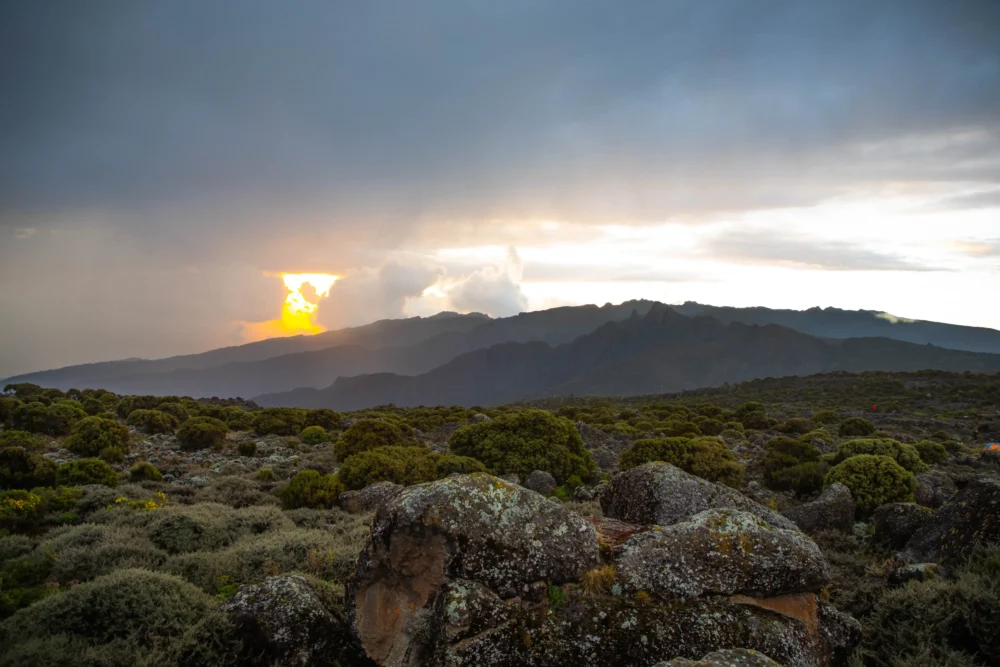
The body acclimatizes based primarily on the altitude where you sleep, not where you walk during the day. The best Kilimanjaro routes take advantage of this principle by including days where you hike up to a high altitude point during the day and then descend to a lower camp to sleep.
The most famous example of this is the Lava Tower acclimatization walk on the Machame and Lemosho routes. On Day 3 or 4 of these routes, climbers hike up to Lava Tower at 4,630 metres, have lunch, and then descend to Barranco Camp at 3,950 metres to sleep. That 680-metre descent makes a significant difference to how well climbers sleep and how well they feel the next morning.
4. Drink Plenty of Water
Dehydration worsens every single symptom of altitude sickness. On Kilimanjaro, the air is extremely dry, and you lose water faster than normal through breath, sweat, and increased urination even when you do not feel thirsty. Thirst is not a reliable indicator of hydration at altitude.
The target: 3 to 4 liters of water per day, every day on the mountain. On summit day, aim for more. Carry a hydration bladder in your pack and sip continuously throughout the day rather than drinking large amounts at once. Avoid fizzy drinks, caffeine, and alcohol completely during the climb.
5. Eat Regularly, Even Without Appetite
Loss of appetite is a normal and extremely common symptom of altitude. Most climbers eat less than usual on Kilimanjaro. This is fine as long as you still eat something. Your body needs fuel to acclimatise and to keep moving.
Focus on carbohydrates, which are the most efficient fuel source at high altitude and are easier to digest than fats or proteins. Eat at every meal, even if it is just a small amount. Keep snacks in your daypack crackers, dried fruit, nuts, energy bars and eat something every one to two hours while hiking.
6. Sleep Well
Poor sleep is one of the most common complaints on Kilimanjaro. Altitude disrupts breathing patterns during sleep (a phenomenon called Cheyne-Stokes breathing), which can cause you to wake frequently or feel like you cannot breathe. This is normal and not dangerous in itself, but it leaves you tired.
Tips for better sleep on the mountain: stay warm (cold is the enemy of sleep at altitude), avoid exertion in the two hours before bed, stay well hydrated during the day, and avoid alcohol entirely. Some climbers find that Diamox (see below) significantly improves
7. Be Completely Honest With Your Guides
This one is critically important. Every morning and evening, our guides will ask you how you are feeling. They will measure your blood oxygen with a pulse oximeter. They will complete a Lake Louise Score assessment.
Please be honest. Tell them about any headache, nausea, dizziness, or unusual tiredness even if you think it is minor. The most dangerous thing a climber can do is hide symptoms because they are afraid of being turned around. Mild AMS caught early is easy to manage. Severe AMS that has been hidden until it becomes HACE or HAPE is a medical emergency.
Our guides have seen altitude sickness in every form. They will not panic, and they will not send you down automatically for a headache. They will assess you properly and make the safest decision together with you.
Diamox (Acetazolamide) — Should You Take It for Kilimanjaro?
Diamox is the most commonly used medication for preventing and treating altitude sickness. Its medical name is acetazolamide. It is a prescription drug that works by accelerating the process of acclimatization specifically, it makes you breathe more deeply and frequently, which increases the amount of oxygen your blood absorbs.
Many Kilimanjaro climbers take Diamox as a precaution, and it is widely considered effective. Here is what you need to know before deciding:
How Does Diamox Work?
At altitude, your body’s normal breathing regulation system which is calibrated for sea-level oxygen levels does not respond quickly enough to the thinner air. Diamox acts on the kidneys to create a mild metabolic acidosis (a slight change in blood pH), which tricks the brain’s breathing centre into signaling for faster, deeper breaths. More breaths mean more oxygen, which means faster acclimatization.
A secondary benefit: Diamox significantly improves sleep quality at altitude by reducing the Cheyne-Stokes breathing pattern that disrupts sleep on the mountain.
Diamox Dosage for Kilimanjaro
The standard preventative dose used by most Kilimanjaro climbers is 125mg twice daily. Start taking it 24–48 hours before you begin ascending (i.e., before Day 1 on the mountain) and continue for the first two to three days at altitude or until you feel well acclimatised. Your doctor will advise the exact dosage appropriate for you.
Some doctors prescribe 250mg twice daily for higher-risk situations. Always follow your doctor’s guidance, not general online advice.
Diamox Side Effects
Diamox is generally well-tolerated, but it does cause side effects in most people. These are not dangerous but can be surprising if you are not expecting them:
- Tingling in hands and feet: The most common side effect. It is harmless and usually mild.
- Increased urination: Diamox is a diuretic. You will urinate more than usual. This makes it even more important to drink plenty of water.
- Strange taste with carbonated drinks: Fizzy drinks may taste flat or metallic. Most climbers avoid them anyway.
- Fatigue: Some people feel more tired than usual, especially in the first day or two.
- Nausea: Less common. Taking the tablet with food usually helps.
Who Should NOT Take Diamox?
Diamox is not suitable for people with:
- Allergy to sulfa drugs (sulfonamides) – this is a contraindication; do not take Diamox if this applies to you
- Kidney disease or kidney stones
- Severe liver disease
- Low sodium or potassium levels (electrolyte disorders)
- People taking certain blood thinners or other medications – check with your doctor
Diamox is a prescription-only medication. You must see a doctor or travel health clinic before your trip to get it and to confirm it is safe for you. Do not buy it without a prescription.
Does Diamox Guarantee You Won't Get Altitude Sickness?
No. Diamox reduces the risk and severity of AMS, but it is not a magic prevention. It also does not cure HACE or HAPE, if these develop, descent is the only effective treatment, regardless of medication. Think of Diamox as a helpful tool, not a substitute for a good route, proper acclimatisation, and a slow pace.
Some climbers choose not to take it, and many of them summit successfully. Others find it makes a significant difference to their comfort and performance. Talk to your doctor and make an informed decision based on your personal health history.
What Happens If You Get Altitude Sickness During the Climb?
Here is exactly what our guides do at each stage:
Mild Symptoms
We slow the pace immediately. We ask you to rest, drink water, and eat something. We will carry out a Lake Louise assessment and take your SpO2 reading. We will not ask you to ascend further until you feel better and your readings are stable. Most mild symptoms resolve with a rest stop and do not end the climb.
Symptoms That Are Not Improving
If mild symptoms do not improve after rest, or if your oxygen saturation drops significantly, we will descend to a lower camp. A descent of just 300–500 metres often produce dramatic improvement within one to two hours. Once you are stable and recovering well, it may be possible to attempt the summit again, your guide will make this assessment with you.
Severe Symptoms — HACE or HAPE
Immediate descent. No discussion, no waiting. We carry emergency supplemental oxygen on every climb and will administer it during descent if necessary. We will also administer appropriate emergency medication (dexamethasone for HACE, nifedipine for HAPE) if carried and trained in its use. We will coordinate with Kilimanjaro National Park rescue services and arrange evacuation if required.
Your life is more important than the summit. We take this view without exception, and our guides are empowered to make the call to descend whenever they believe safety requires it.
Common Questions About Kilimanjaro Altitude Sickness
Very common. Studies suggest around 75% of Kilimanjaro climbers experience some symptoms of AMS at some point during their climb. For most people, the symptoms are mild a headache or disturbed sleep and do not stop the climb. Serious altitude sickness (HACE or HAPE) is much less common but does happen, which is why good guides and the right route matter so much.
In rare cases, yes HACE and HAPE can be fatal if not treated promptly. However, deaths on Kilimanjaro from altitude sickness are uncommon, especially when climbers are with professional guides who perform daily health checks and respond quickly to warning signs. Choosing a reputable operator, a longer route, and being honest about your symptoms are the most effective ways to stay safe.
The overall summit success rate on Kilimanjaro is estimated at around 65%. However, on longer routes like the 8-Day Lemosho, success rates can exceed 90% with a good operator. The difference is almost entirely due to acclimatisation time. Shorter routes have significantly lower success rates, largely because of altitude sickness.
Both can be used to manage headache pain at altitude. Ibuprofen (400mg) has been shown in some studies to help prevent AMS headaches as well as treating them. Paracetamol is also effective for pain relief. Neither drug treats the underlying cause of altitude sickness they only manage the pain. If your headache is severe, persistent, or accompanied by other symptoms, do not mask it with painkillers and continue ascending. Tell your guide.
AMS (Acute Mountain Sickness) is the common, manageable form of altitude sickness. Symptoms are similar to a bad hangover. HACE (High Altitude Cerebral Edema) is a serious form where fluid builds up around the brain, causing confusion, loss of coordination, and potentially loss of consciousness. HAPE (High Altitude Pulmonary Edema) is fluid in the lungs, causing breathlessness at rest and a dangerous drop in blood oxygen. Both HACE and HAPE are medical emergencies requiring immediate descent.
Many people with well-controlled asthma successfully climb Kilimanjaro. However, altitude can trigger or worsen respiratory symptoms. You must speak to your doctor before the climb and get a thorough assessment. Bring your inhaler and any other medication. Tell your guides about your condition before the climb begins.
A pulse oximeter is a small clip-on device that measures the amount of oxygen in your blood (SpO2) and your pulse rate. At sea level, a healthy reading is 95–100%. At altitude, readings of 80–90% are normal and expected. Our guides use pulse oximeters at every camp to get an objective measure of how each climber’s body is adjusting to altitude. A reading that drops suddenly, or is significantly lower than expected for a given altitude, is a sign that a climber may be struggling even if they feel OK.
Altitude tents (hypoxic tents) simulate reduced oxygen levels and can help your body begin to produce more red blood cells before the climb. They are used by some serious mountaineers and endurance athletes. However, they are expensive, require weeks of consistent use to show significant benefit, and are not necessary for most Kilimanjaro climbers. Choosing the right route is far more effective and far more affordable.
Plan Your Kilimanjaro Climb with Confidence
Altitude sickness is real and it is the main reason climbers do not reach Uhuru Peak. But it is not something to be afraid of, it is something to be prepared for. Choose the right route, go slowly, drink plenty of water, and be honest with your guides. With the right preparation and the right team beside you, the summit is within reach.
Exceptional Travel Expert runs Kilimanjaro climbs every month of the year. Every climb includes professionally trained guides with health monitoring equipment, daily medical assessments, emergency oxygen, and a genuine commitment to your safety. When you book with us, we will talk you through everything, route selection, health preparation, what to bring, and what to expect.
Request Your Free Kilimanjaro Climb Proposal
This Kilimanjaro Altitude Sickness guide was last updated in March 2026. It reflects current climbing conditions, acclimatization strategies, and safety advice, based on our 10+ years of experience on Mount Kilimanjaro.
What Our Travelers Say
Posted on Tripadvisor
 Ingrid
Verified
Great service Just returned from the most incredible week in Tanzania. From the moment Jackline answered my first email to the final goodbye with our guide, everything was flawless. Exceptional Travel Expert truly lives up to its name.Posted on Tripadvisor KatrinaHighly recommended! We did a combo trip, safari first with Shafi then straight into the Kili climb with Minja. Both were incredible in their own way. Shafi is so laid back and fun, Minja is focused and really gets you to the top. The coordination between everything by Exceptional Travel Expert was seamless. Jackline sorted all our booking questions before we flew out too, super helpful."Posted on Tripadvisor
 Francie10/10 Janeth helped us sort out all the logistics before our trip and was so thorough. She made sure we had the right gear list, knew what to expect, and even followed up a week before departure just to check everything was good. Little things like that make such a big difference. You can tell the whole team genuinely cares about your experience.Posted on Tripadvisor
 Nancy MExcellent tour This was my first time in Africa and I was a bit nervous about it all. Jamali picked us up and straight away I felt relaxed. He answered all our silly questions without making us feel silly at all. Every day was perfectly planned and we never had a dull moment. I've already talked about five of my friends to go through Exceptional Travel Expert and ask for Jamali specifically.Posted on Tripadvisor
 Sandra OAmazing experience Benson took us through the Serengeti and I genuinely felt like I had a friend showing me around, not just a guide. He reads the landscape like no one I've ever seen. Spotted a leopard in a tree that none of us would have noticed in a million years. The support team from Exceptional Travel Expert made sure everything ran perfectly in the background too.Posted on Tripadvisor
 Bill RInquiry and Booking with Exceptional Travel Expert Before I even booked, I had a million questions and Jackline answered every single one so fast and clearly. I was emailing at odd hours and she always got back to me quickly. She made the whole planning process feel easy and stress free. Such a warm and professional person. Really set the tone for what ended up being an amazing trip.Posted on Tripadvisor
 Bertha HReally great experience Jamali is something else. From day one you can tell this person really loves what they do. Super knowledgeable, funny, and always one step ahead. We saw the big five in three days and the whole time felt so smooth and well organized. The whole Exceptional Travel Expert team was fantastic but Jamali really stands out as a top guide, no question.Posted on Tripadvisor
 Niraj KExceptional Travel Expert – Seamless, Personalized, and Unforgettable Service Exceptional Travel Expert! From the very first consultation, the service was professional, attentive, and completely personalized. Every detail of the itinerary was thoughtfully planned, making the entire journey smooth and stress-free. Their knowledge of destinations, insider recommendations, and prompt communication truly set them apart. They went above and beyond to ensure a memorable experience, handling everything with care and expertise. I highly recommend their services to anyone seeking a seamless, well-organized, and unforgettable travel adventure.Posted on Tripadvisor
 Ushie PReally great experience Honestly, I wasn't sure what to expect before this trip but wow, Shafi completely blew me away. He knew exactly where to find the animals and was so patient explaining everything to us. Never felt rushed. The guy has a real gift for making you feel like you're the only people on safari. Would 100% book again through Exceptional Travel Expert.Posted on TripadvisorMaulidi A
Verified
truly a five star experience Our experience with Exceptional Travel Expert was simply amazing. From the moment we landed, we felt taken care of. The team helped us with airport transfers, hotel bookings, and even recommended places to visit in Arusha. The safari itself was unforgettable, so many animals, beautiful scenery, and friendly people everywhere. The guide made sure we were comfortable and enjoying every moment. Truly a five-star experience!
Are you looking for a private safari or Kilimanjaro climb for your dates? Speak to our Tanzania expert to start planning your tailor-made holiday trip for your dates!
Send your inquiry now and our safari experts will reach out within 24 hours! – Let’s begin planning your Tanzania safari or Kilimanjaro climb!
