
Tanzania Fly-In Safari: Complete Guide to Flying Safaris
Tanzania Fly-In Safari 2026/2027: Your Complete Guide to Flying Safaris
Tanzania is one of the biggest countries in Africa. Its national parks are spread far and wide and some of the best ones are very difficult to reach by road. Long drives on bumpy, dusty tracks can take 8–10 hours and eat up a big part of your trip. A Tanzania fly-in safari solves this completely. Instead of sitting in a vehicle all day on rough roads, you board a small plane and fly straight to the park. In as little as 45 minutes, you land right at a bush airstrip, sometimes with animals watching from the edge of the runway and your game drive begins immediately.
This guide tells you everything you need to know about a flying safari in Tanzania. We cover which parks you can fly to, how it works, sample itineraries, what the flights are actually like, how much it costs, and how to book. Whether you want a luxury Tanzania fly-in safari, a short 3-day flying trip, or a longer fly-in-and-out journey across multiple parks, this page has all the information you need.
At Exceptional Travel Expert, we organize Tanzania fly-in safari packages every week. We know all the airlines, airstrips, and lodges and we make sure every connection works smoothly. Contact us here to start planning your flying safari.
What Is a Tanzania Fly-In Safari?
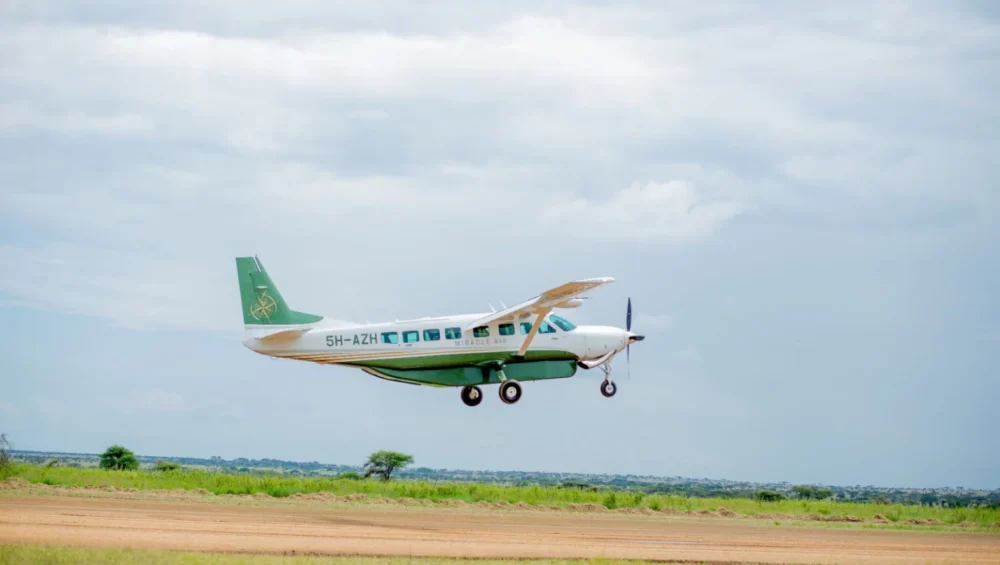
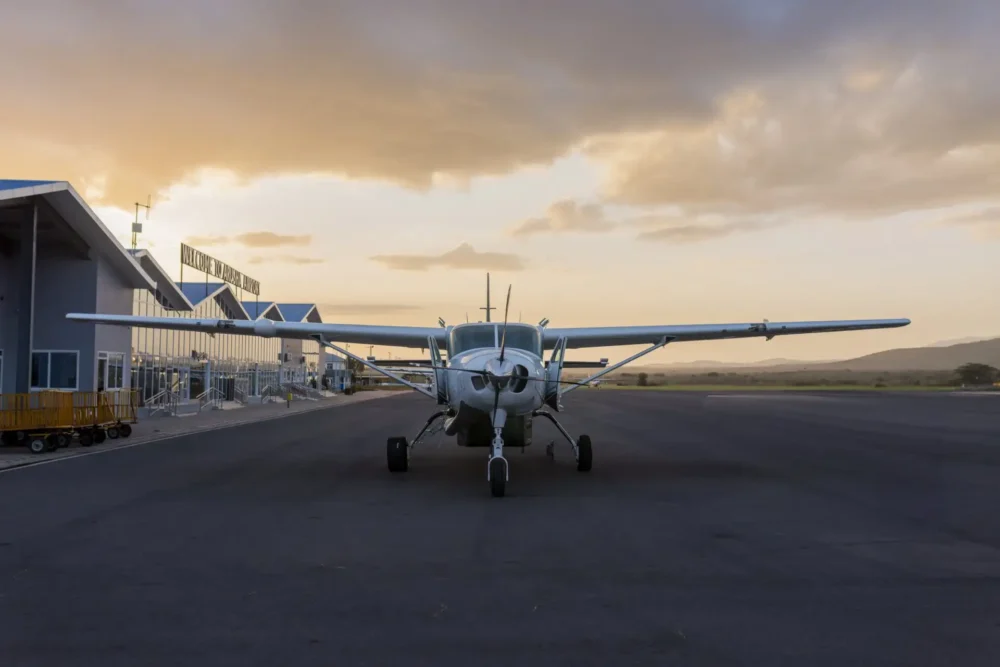
A Tanzania fly-in safari, also called a Tanzania flying safari or Tanzania air safari, is a safari where you travel between parks or to your lodge by small plane instead of by road. You fly on a light aircraft, usually a Cessna Caravan or Cessna Grand Caravan, from one of Tanzania’s main airports to a bush airstrip located right inside or next to the national park. From there, your guide picks you up in a 4×4 vehicle, and your game drive starts.
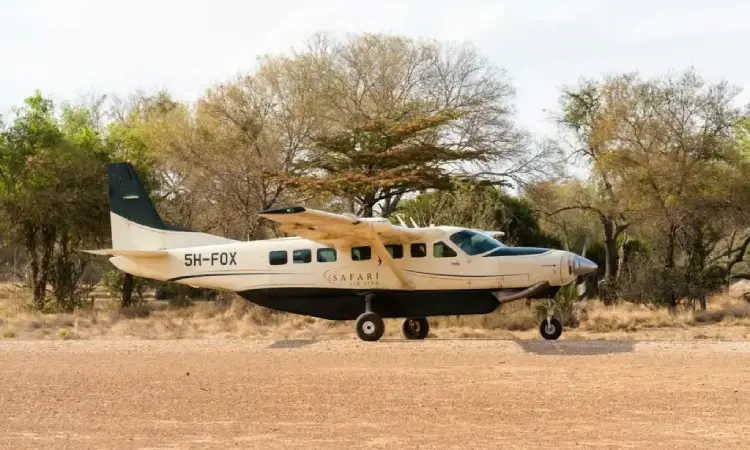
The bush airstrips in Tanzania are usually simple grass or gravel runways cut into the middle of the wilderness. Some are just flat, open ground surrounded by acacia trees and wildlife. Landing at one of these is a genuinely exciting experience, it is a very different feeling from arriving at a big city airport. It feels like you are dropping into the heart of Africa from the sky.
You can use a fly-in safari for one park or for multiple parks on the same trip. For example, you can fly from Arusha to the Serengeti, then fly from the Serengeti to Ruaha, and then fly from Ruaha to Zanzibar, all in one smooth connected journey with no long road travel between stops.
Why Choose a Fly-In Safari in Tanzania?
There are several very good reasons why a fly-in safari Tanzania is worth considering for your trip:
- Save a lot of time: Flying between parks takes 45 minutes to 2 hours. Driving the same route can take 8–12 hours. For a trip of 7–10 days, that time saved is enormous, you get far more game drive hours and much less time sitting in a vehicle.
- Access remote parks: Some of Tanzania’s very best national parks, like Ruaha and Nyerere (Selous) in the south, are very hard to reach by road. Flying is the only practical way to visit them as part of a multi-park itinerary.
- Avoid rough roads: Many of Tanzania’s park roads are unpaved, dusty, and very bumpy. After a long game drive, spending 10 hours on a dirt track is exhausting. Flying is far more comfortable.
- See Tanzania from the sky: The view from a small plane flying over the Serengeti, Ngorongoro Crater, or the vast Ruaha wilderness is spectacular. You see the landscape in a completely different way — the size and scale of the wild is truly impressive from the air.
- Combine more parks in less time: With a Tanzania fly-in safari, you can visit 3 or 4 different parks in just one week, which would be very difficult to do by road without spending most of your trip travelling between them.
- Perfect for luxury travellers: Fly-in safaris are a hallmark of luxury Africa travel. Flying in to a remote camp, being met by your guide on the airstrip, and driving straight into a game drive is one of the great experiences of African safari.
- Great for shorter trips: If you only have 3–5 days in Tanzania, a fly-in safari means you spend almost no time travelling and almost all your time watching wildlife. It makes short trips much more rewarding.
Interested? See all our Tanzania safari tours or contact us to plan your fly-in safari.
How Does a Tanzania Fly-In Safari Work?
Here is a simple step-by-step explanation of how a fly-in safari in Tanzania works:
- You arrive in Tanzania: Most international visitors arrive at Kilimanjaro International Airport (near Arusha) or Julius Nyerere International Airport in Dar es Salaam. Some start from Zanzibar.
- You fly to the park: A small plane, usually a Cessna Caravan carrying 9–12 passengers, flies you from the main airport or a smaller domestic airport to a bush airstrip near your lodge. Flights take between 30 minutes and 2 hours.
- Your guide meets you on the airstrip: Your guide and 4×4 safari vehicle will be waiting for you when you land. On some airstrips, there are animals nearby as you arrive, it can feel like stepping off the plane and straight into a game drive.
- You enjoy your safari: Stay at your lodge or camp for 1–3 nights. Go on morning and evening game drives, walking safaris, or other activities.
- You fly to your next destination: When it’s time to move on, your guide takes you back to the airstrip and you board another flight to your next park, a beach destination, or the main airport.
- You fly home or to Zanzibar: Many fly-in safari travellers end their trip with a few days on the beach in Zanzibar, a perfect way to relax after the excitement of the bush. See our Tanzania safari and beach page for more ideas.
Which Parks Can You Fly into in Tanzania?
Tanzania has a well-developed network of bush airstrips. Here are the main parks and destinations you can reach by small plane as part of a Tanzania fly-in safari:
Serengeti National Park
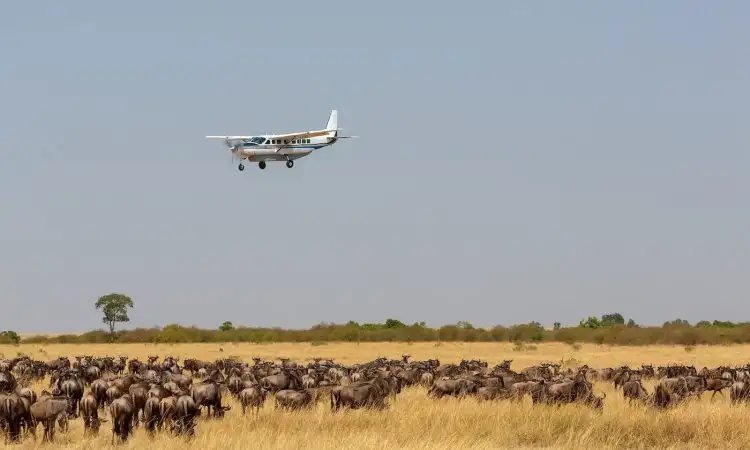
The Serengeti is the most popular fly-in destination in Tanzania. It has several airstrips across the park, Seronera in the centre, Kogatende in the far north, and Ndutu in the south, which means you can fly to whichever part of the Serengeti is best for wildlife at the time of your visit. The flight from Arusha takes about 1 hour 30 minutes and is absolutely spectacular — you can often see herds of wildebeest from the plane as you approach.
A fly-in safari Serengeti is the ideal way to see the Great Wildebeest Migration. Check our best time to see the migration guide to find out which airstrip is best for the time of year you are visiting.
Ngorongoro Crater
Lake Manyara Airstrip is the closest airstrip to Ngorongoro. From there it is a short drive up to the crater rim. You can fly from Arusha to Manyara in about 30 minutes and be inside the crater for a game drive within 2 hours of leaving Arusha. For a Ngorongoro Crater visit as part of a multi-park flying itinerary, this works very well.
Tarangire National Park
Tarangire has its own airstrip. A flight from Arusha takes just 20–30 minutes — very quick. Tarangire is famous for its large elephant herds and huge baobab trees and is an excellent park to include in a fly-in safari before moving on to the Serengeti. Read more about Tarangire National Park.
Ruaha National Park
Ruaha is one of Africa’s great wilderness destinations — but it is very remote. Msembe Airstrip inside Ruaha is about a 2-hour flight from Arusha or 1.5 hours from Dar es Salaam. Without flying, getting to Ruaha requires a very long drive on rough roads, which is why almost all visitors to Ruaha arrive by air. Ruaha has exceptional game viewing with lion, leopard, elephant, wild dog, and kudu — and almost no other tourists. A fly-in safari Ruaha is one of the most exclusive safari experiences in Africa.
Nyerere National Park (Selous)
Nyerere National Park, also known as Selous is Africa’s largest protected area. Its airstrip is about 45 minutes from Dar es Salaam and 45 minutes from Zanzibar. This makes it the easiest fly-in option for travelers starting from the coast or Zanzibar. Nyerere is known for its boat safaris on the Rufiji River, walking safaris, and vast wild landscapes with almost no other tourists. A Tanzania fly-in safari from Zanzibar to Nyerere is one of the smoothest and most rewarding itinerary combinations you can do.
Lake Manyara National Park
Lake Manyara has its own small airstrip. The Park is compact but packed with flamingos, tree-climbing lions, and great birdlife. It is perfect as a short one-day stop on a multi-park fly-in itinerary. The flight from Arusha takes just 20 minutes.
Zanzibar, Mafia Island, and Pemba Island
After your mainland safari, you can fly to Zanzibar (25 minutes from Dar es Salaam), Mafia Island (45 minutes from Dar es Salaam), or Pemba Island. These beach destinations are popular final stops on a Tanzania fly-in safari. See our Tanzania safari and beach guide for more details about each beach destination.
What Are the Planes Like on a Tanzania Fly-In Safari?
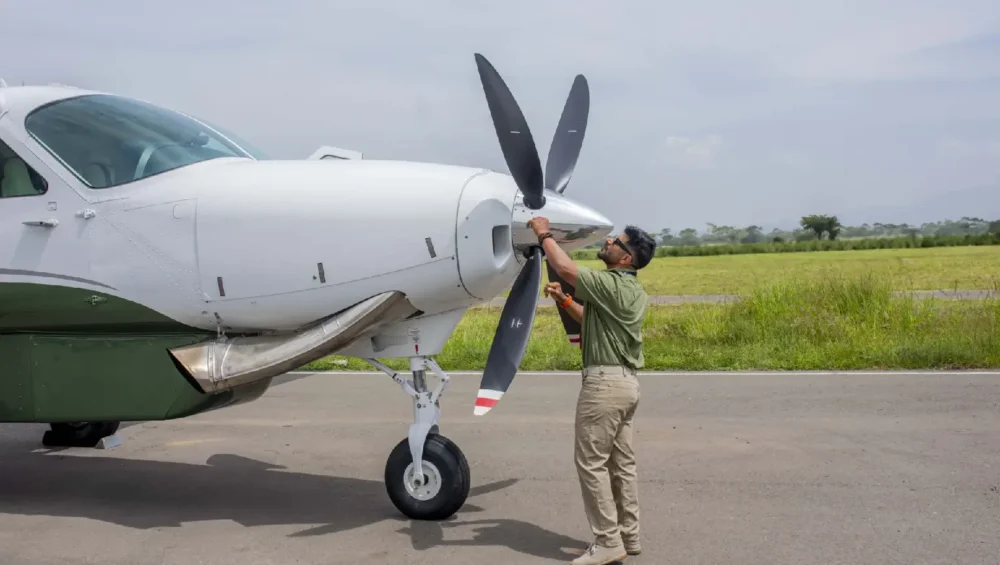
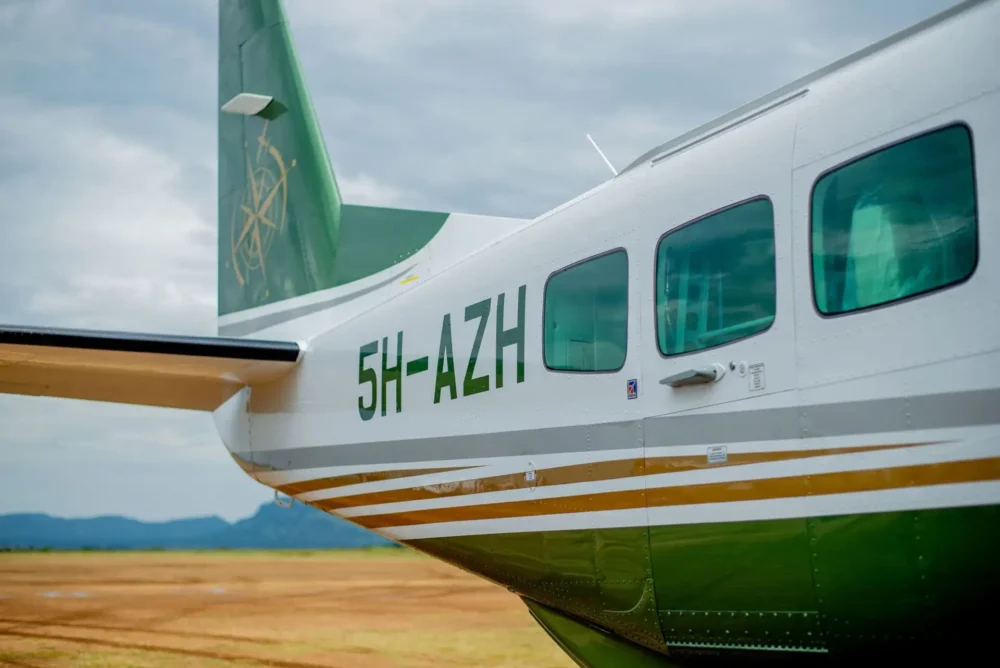
Most Tanzania fly-in safari flights operate on Cessna Caravan or Cessna Grand Caravan aircraft. These are small, single-engine turboprop planes that typically carry between 9 and 12 passengers. They are the workhorse of the African bush flying world and are specifically built to land on short, unpaved airstrips in remote locations.
The planes are small, so the views from the window are exceptional, far better than on a large commercial aircraft. You sit close to the window and can see the landscape clearly as you fly over the plains and wildlife below. Many travelers say that the bush flights themselves are one of the highlights of their trip.
The main bush flying airlines in Tanzania are Miracle Air, Flightlink, Auric Air and Coastal Aviation. Both airlines operate modern, well-maintained Cessna Caravan fleets and are very experienced on Tanzania’s bush routes. Auric Air was named Tanzania’s Leading Domestic Safari Carrier at the 2025 World Travel Awards, a strong sign of their reliability and service quality.
Important: Luggage Rules on Bush Planes
Bush planes have strict weight limits. Most allow just 15kg of luggage per person and it must be in a soft bag, not a hard suitcase (hard suitcases cannot be loaded into the small baggage holds). We recommend packing a soft duffel bag for your fly-in safari days and leaving any hard luggage at your hotel in Arusha or Dar es Salaam. Some airlines allow excess baggage for an extra fee. Please ask us when booking and we will make sure you are fully prepared.
Tanzania Fly-In Safari Itinerary Ideas
Here are some popular Tanzania fly-in safari itinerary options for different travel styles and durations:
3-Day Tanzania Fly-In Safari: Serengeti & Hot Air Balloon Safari
4-Day Tanzania Fly-In Safari from Zanzibar to Serengeti & Ngorongoro
8-Day Tanzania Fly-In Safari: Great Migration, Hot Air Balloon & Mara River Crossing
6-Day Tanzania Fly-In Safari | Fly In, Drive Out Luxury Safari
We can adjust any of these itineraries to fit your dates and budget. Get in touch to start planning.
Best Time for a Tanzania Fly-In Safari
The good news is that Tanzania’s bush airstrips are open all year, so you can do a fly-in safari Tanzania in any month. But some months give you a better experience than others:
June to October – Best Overall
The dry season is the best time for a flying safari. Wildlife is easy to see, the weather is clear and sunny, and bush airstrips are in good condition. This is also when the Great Wildebeest Migration river crossings happen in the northern Serengeti, one of the most dramatic wildlife events in the world. Flights to Kogatende airstrip in the north are in high demand from July to October, so book early. Read our guide on the best time to see the migration for month-by-month details.
January to March—Excellent for Calving Season
January and February are the Serengeti calving seasons, when thousands of baby wildebeest are born on the short grass plains of the Ndutu area in the south. This is one of the most exciting wildlife events of the year and a great time to fly in. Prices are lower than peak season, and there are fewer other tourists. The weather is also good for flying.
December – A Good Time to Go
Early December is a very enjoyable time for a flying safari Tanzania. Parks are open, weather is mostly good, and it is easy to combine with the festive season. Popular for Tanzania honeymoon safaris and end-of-year family trips. See our Tanzania family safari tours for family-friendly fly-in options.
Avoid April and May
The heavy rains of April and May can make some bush airstrips soft and difficult to land on. Some camps close and some routes are cancelled. We recommend avoiding these months for a fly-in safari. Contact us and we’ll always tell you the current status of specific airstrips for your travel dates. Read our guide for more details about the best time to visit Tanzania.
Tanzania Fly-In Safari Cost
A fly-in safari Tanzania cost is naturally higher than a road safari because you are paying for internal flights in addition to accommodation and activities. Here is a realistic guide to help you budget:
Individual Bush Flight Costs
- Arusha to Serengeti (Seronera): approximately $180–$300 per person one way on a scheduled flight
- Arusha to Tarangire: approximately $100–$180 per person one way
- Serengeti to Ruaha: approximately $250–$400 per person one way (via Dar es Salaam)
- Zanzibar to Nyerere (Selous): approximately $120–$200 per person one way
- Private charter flights: from approximately $800–$2,000+ per flight depending on the aircraft, number of passengers, and distance
Note: prices change seasonally and depend on the airline and booking timing. We always confirm the latest flight prices when we build your itinerary.
Full Package Cost
- Mid-Range 5–7 day fly-in safari: approximately $4,000–$8,000 per person including flights, lodge accommodation, game drives, and park fees
- Luxury 7–10 day fly-in safari: approximately $8,000–$20,000+ per person with exclusive camps, private charter flights, and all activities
To understand all the factors that affect your total cost, read our Tanzania safari cost guide. For a personalised price for your specific trip, request a free quote here.
Who Is a Tanzania Fly-In Safari Good For?
- Travellers with limited time: If you only have 5–7 days, flying saves you so much road time that you can see 2–3 parks properly instead of just one.
- Luxury travellers: A fly-in safari is a classic luxury Africa experience. Arriving at a remote airstrip with only a handful of guests and driving straight into prime wildlife territory is something that feels genuinely special.
- Honeymoon couples: A Tanzania fly-in safari combines romance, adventure, and exclusivity perfectly. See our Tanzania honeymoon page for more tailored ideas for couples.
- Families: Kids (and adults!) love the small plane flights. The absence of long road drives also makes the trip much more comfortable for children. See our Tanzania family safari tours.
- Travellers combining safari and beach: A fly-in safari is the perfect companion to a beach holiday. Fly between parks and then fly straight to Zanzibar. See our Tanzania safari and beach guide.
- Those visiting remote parks: If you want to see Ruaha, Nyerere, or other southern parks, flying is not just convenient — it’s essential. The road options are simply too slow and uncomfortable to be worth it.
Recommendation for Your Tanzania Fly-In Safari
- Pack a soft bag: Bush planes can only take soft bags — duffel bags or roll bags. Hard suitcases will not fit. The weight limit is usually 15kg per person including hand luggage. Pack light and leave extra luggage at your first or last hotel.
- Book flights early: Seats on popular routes like Arusha to Serengeti fill up fast, especially in peak season (June–October). Book your flights at least 3–6 months ahead.
- Allow time for connections: Bush planes usually operate on scheduled routes and some flights require a quick transit stop. We always build buffer time into your itinerary so connections are stress-free.
- Dress in layers: Small planes can be cold at higher altitudes, especially early in the morning. Bring a light fleece or jacket. On the ground in Tanzania, temperatures during dry season mornings can also be cool.
- Bring your camera to the window: The views from a bush plane are incredible. Sit by a window and keep your camera ready from the moment you take off — you never know what you might see below.
- Keep your documents handy: You will need your passport or ID for domestic check-in. Some airstrips also require you to show your park permit or booking confirmation.
- Sort your Tanzania e-visa: Most nationalities need a visa to enter Tanzania. Apply online in advance at the Tanzania e-visa portal. It is faster and easier than getting a visa on arrival.
- Malaria protection: Tanzania is a malaria area. Visit your doctor or travel clinic before your trip and take the right antimalarial medication. Use DEET insect repellent and long sleeves in the evenings.
Tanzania Fly-In Safari – Common Questions Answered
What is a fly-in safari in Tanzania?
A Tanzania fly-in safari is a safari where you travel between national parks and lodges by small plane instead of by road. You fly on a light aircraft like a Cessna Caravan and land directly at bush airstrips inside or near the national parks. It saves time, avoids long road journeys, and gives you stunning aerial views of the Tanzanian wilderness.
How long are the flights on a Tanzania fly-in safari?
Most domestic bush flights in Tanzania take between 30 minutes and 2 hours. Common routes and flight times include: Arusha to Serengeti (about 1.5 hours), Arusha to Tarangire (about 30 minutes), Serengeti to Ruaha (about 2 hours via Dar es Salaam), and Zanzibar to Nyerere (Selous) (about 45 minutes).
How many people are on a bush plane in Tanzania?
Most bush planes in Tanzania carry between 9 and 12 passengers. They are small Cessna Caravan or Grand Caravan aircraft. If you want total privacy, you can also book a Tanzania private charter safari where you have the entire plane to yourself — this is more expensive but gives you complete flexibility on timing and routing.
What is the luggage limit on a Tanzania bush plane?
The standard luggage limit on Tanzania bush planes is 15kg per person including hand luggage. Your bag must be soft — a duffel bag, roll bag, or soft holdall. Hard suitcases cannot be loaded onto bush planes. If you have more luggage, it can usually be stored at your hotel in Arusha or Dar es Salaam while you are on safari.
Is a fly-in safari in Tanzania safe?
Yes. Tanzania’s bush flying airlines are well-established, professionally operated, and regulated by the Tanzania Civil Aviation Authority (TCAA). Airlines like Auric Air and Coastal Aviation have many years of experience flying safari routes and maintain their aircraft to international safety standards. The Cessna Caravan aircraft used on these routes is one of the most proven and reliable bush planes in the world.
Can I do a fly-in safari from Zanzibar?
Yes. A Tanzania fly-in safari from Zanzibar is one of the most popular options, especially for travellers who have already spent a few days on the beach and want to add a wildlife experience. The closest and easiest park to fly to from Zanzibar is Nyerere (Selous) National Park — the flight takes about 45 minutes. From Nyerere you can also connect onwards to Ruaha or other parks.
What is the difference between a fly-in safari and a driving safari in Tanzania?
A driving safari uses a 4×4 vehicle to travel between parks and to game drives. This is more affordable but involves long road transfers (often 6–10 hours between parks). A fly-in safari replaces the road transfers with short flights — it is faster, more comfortable, and gives you more time for actual game viewing. Flying is more expensive, but for a 5–10 day trip, the time you save is very significant.
Can I combine a fly-in safari with a Kilimanjaro climb?
Yes. Many travellers do a Kilimanjaro climb first and then take a fly-in safari as a reward. A typical combination might be 7–8 days climbing Kilimanjaro, followed by a 3–4 day fly-in safari in the Serengeti, and then a few days in Zanzibar. Check our Kilimanjaro climbing guide, Kilimanjaro climb cost, and best time to climb Kilimanjaro for more details.
What parks can I visit on a Tanzania fly-in safari?
You can fly into almost all of Tanzania’s major national parks, including Serengeti National Park, Tarangire National Park, Ngorongoro (via Lake Manyara airstrip), Ruaha National Park, Nyerere National Park (Selous), Lake Manyara National Park, and from there fly onwards to Zanzibar, Mafia Island, or Pemba Island for a beach stay. See our Tanzania safari destinations page for more details on each park.


Plan Your Tanzania Fly-In Safari Today
A Tanzania fly-in safari is one of the finest travel experiences in the world. You float above the Serengeti plains watching wildebeest herds below, land at a bush airstrip surrounded by wilderness, and step straight into one of Africa's greatest national parks. There is nothing quite like it. At Exceptional Travel Expert, we plan Tanzania flying safaris for couples, families, groups, and solo travellers of all budgets. We handle all the flight connections, lodge bookings, and park logistics so that everything works perfectly. No long waits, no missed connections — just a smooth and unforgettable safari experience from start to finish. Get in touch today and we will design the perfect fly-in safari for you.
Disclaimer: Some images on this page are the property of Miracle Air, Flightlink, Regional Air, Safarilink, and Coastal Aviation. All image rights belong to their respective owners.