Great Migration Tanzania: Safari Guide & Best Time
Great Migration Safari: Your Complete Tanzania Guide (2026/2027)
The Great Migration safari is one of the most exciting things you can do in Africa. Every year, over 1.5 million wildebeest, plus hundreds of thousands of zebras and gazelles, travel in a giant circle across the Serengeti in Tanzania and the Masai Mara in Kenya. They follow the rain and the fresh green grass. The journey never stops. It goes on all year, every year.
People travel from all over the world to see this. Some come for the famous Mara River crossings, where thousands of wildebeest jump into crocodile-filled water. Others come for the calving season, when thousands of baby animals are born every single day on the open plains. Both are unforgettable.
This guide covers everything you need to know about planning a Great Migration safari in Tanzania, when to go, where to stay, what happens each month, how much it costs, and how to book. If you have questions after reading, contact our team here and we will be happy to help.
What Is the Great Wildebeest Migration?
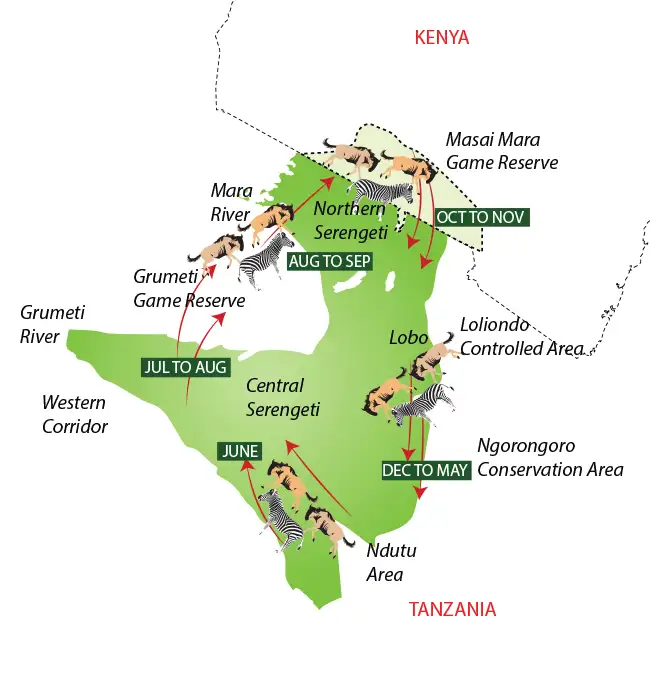
The Great Wildebeest Migration is a year-round movement of millions of animals across the Serengeti-Mara ecosystem in East Africa. The herds travel in a big loop, from the southern Serengeti in Tanzania all the way north into Kenya’s Masai Mara, then back again. The total distance is about 1,800 miles (3,000 kilometers).
It is not just animals walking from one place to another. It is a story of survival. Lions, cheetahs, leopards, and hyenas follow the herds. Crocodiles wait in the rivers. The wildebeest face all of this every single year just to find food and water. Every stage of the journey is dramatic and exciting to watch.
- Animals: Over 1.5 million wildebeest, 200,000 zebras, and 400,000 gazelles
- Distance: About 1,800 miles (3,000 km) in a circular route each year
- Location: Serengeti National Park, Tanzania and Masai Mara, Kenya
- It never stops: The migration runs all year, there is no single start or end date
- Best highlights: Calving season (January–March) and river crossings (July–October)
For the full month-by-month timing breakdown, read our detailed Great Migration best time guide.
Where Are the Wildebeest Each Month? Simple Monthly Guide
The herds move to different parts of the Serengeti depending on the time of year. Here is a simple overview. Below the table we explain each phase in more detail.
| Month | Where Are the Herds? | Best Experience | Crowds & Cost |
|---|---|---|---|
| Jan – Mar | Southern Serengeti (Ndutu) | Calving season – thousands of baby wildebeest born daily. Huge predator activity. | Moderate – good value Moderate |
| Apr – May | Central & Western Serengeti | Herds moving north. Wet roads, some camps closed. Not ideal for most visitors. | Low season – avoid Avoid |
| Jun – Jul | Western Serengeti (Grumeti) | Grumeti River crossings begin. Smaller but dramatic. Great weather starting. | Rising – book early Rising |
| Aug – Oct | Northern Serengeti (Mara River) | Famous Mara River crossings. Thousands of wildebeest leap into crocodile water. Peak season. | Peak – book 6–12 months ahead Peak |
| Nov – Dec | Southern Serengeti (returning) | Herds begin moving south again. Good game viewing, fewer tourists, lower prices. | Low–moderate – great value Great Value |
January to March — Calving Season (Southern Serengeti)
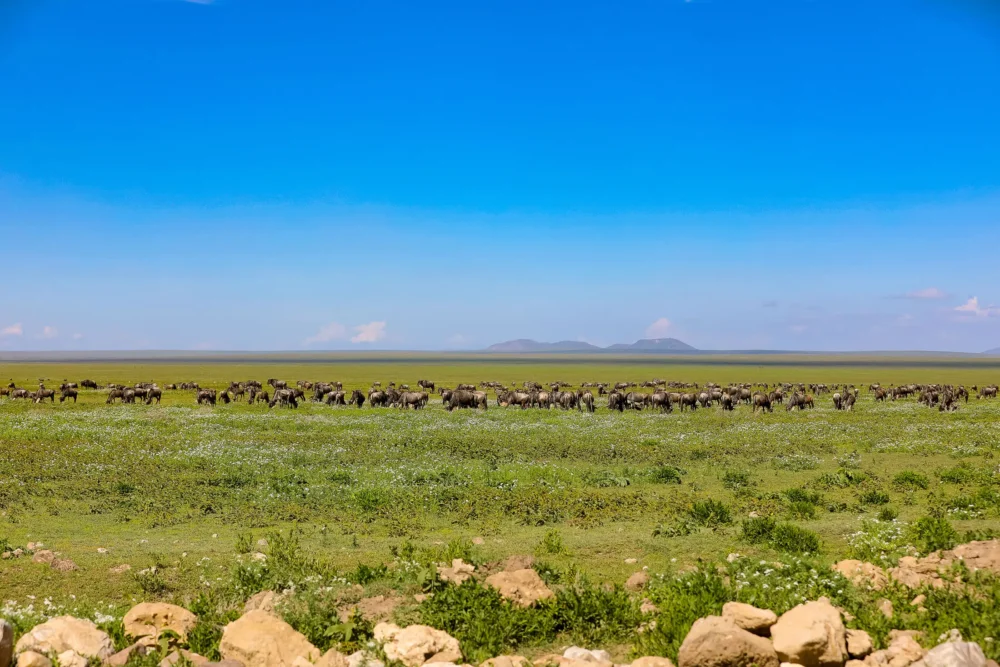
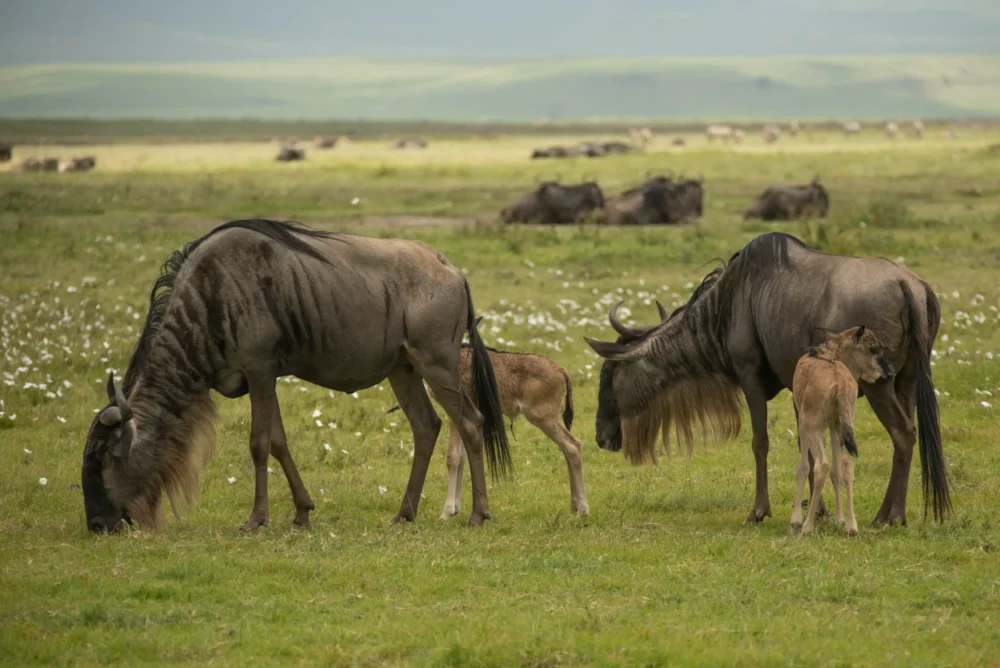
This is one of the most special times to see the Great Migration. The huge herds are in the short-grass plains of the southern Serengeti, in an area known as Ndutu. This is where the wildebeest give birth. About 8,000 baby wildebeest are born every day during this period, that is roughly one every ten seconds.
Baby animals attract predators. Lions, cheetahs, and leopards are everywhere during calving season. The grass is short, which means you can see the action from far away, and everything is clear. It is also a beautiful time of year, the plains are green and the light is soft.
This is a great option for couples. If you are also planning a Tanzania honeymoon safari, combining calving season in the Serengeti with a Zanzibar beach stay in January or February is one of the best trips you can plan.
You can also combine your visit with a stop at Ngorongoro Crater and Tarangire National Park for a complete northern Tanzania experience.
April and May — Moving North (Avoid These Months)
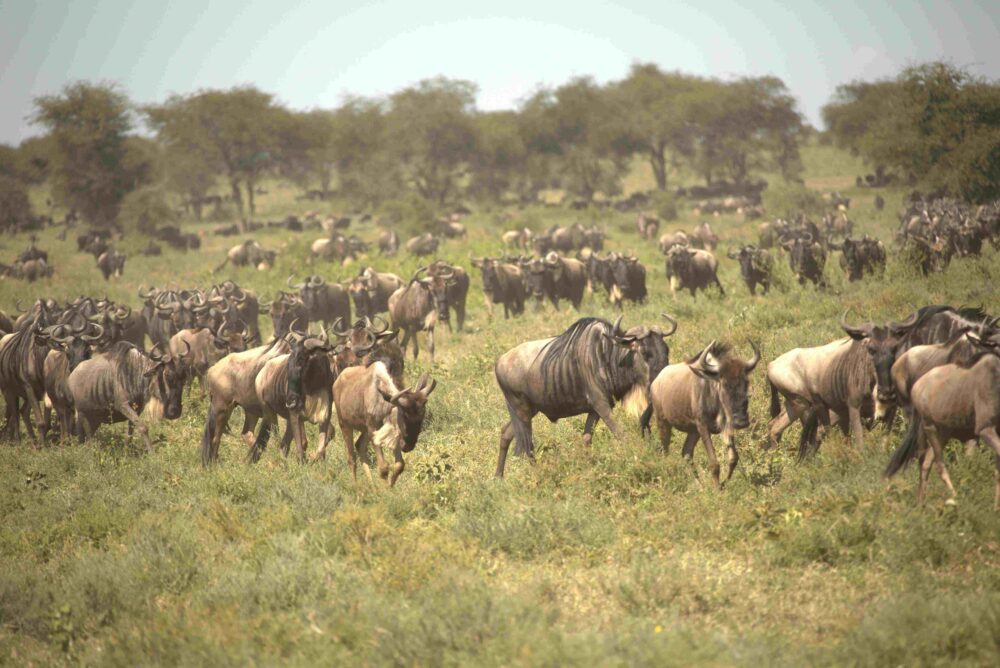
The rains arrive in April, and the herds begin moving north through the central and western Serengeti. The landscape turns very green, and the parks look beautiful. However, the roads become muddy and hard to drive on. Some lodges close during this period.
These are not the best months for a migration safari. We recommend avoiding April and May if possible, unless you specifically want a very quiet, green safari with very low prices.
June and July — Grumeti River Crossings (Western Serengeti)
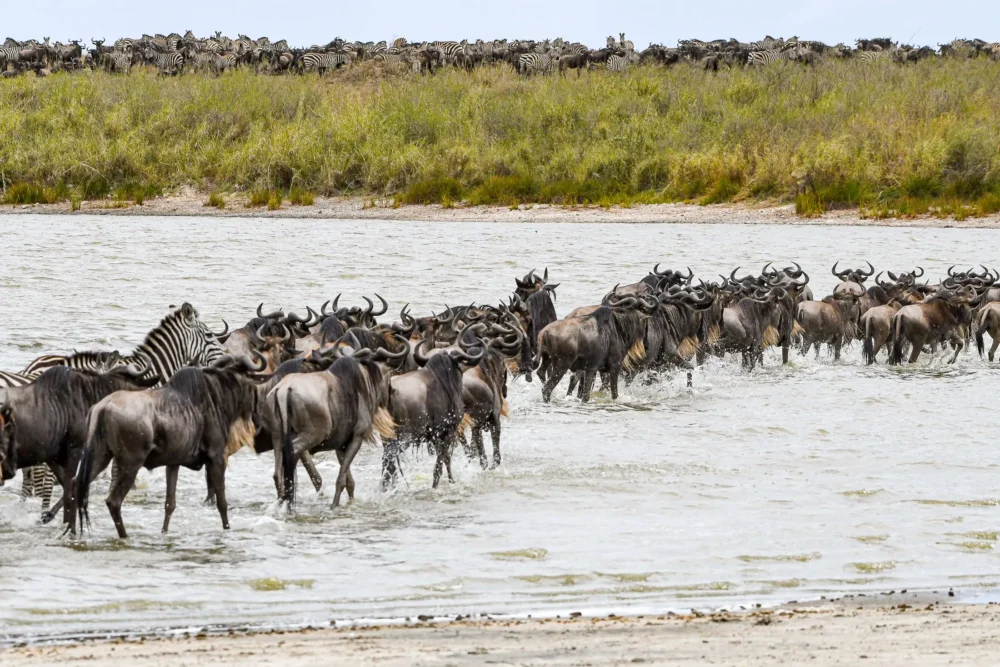
By June, the herds reach the western corridor of the Serengeti. Here they must cross the Grumeti River. These crossings are not as famous as the Mara River crossings further north, but they are still very exciting. The Grumeti River has some of the largest crocodiles in Africa.
June is also when the dry season starts in earnest. The weather becomes sunny, the grass gets shorter, and wildlife sightings get better every week. This is a great time to book a Serengeti migration safari, the main crowds have not arrived yet but the action is already building. Prices are also slightly lower than peak season.
July to October — Mara River Crossings (Northern Serengeti) — PEAK SEASON
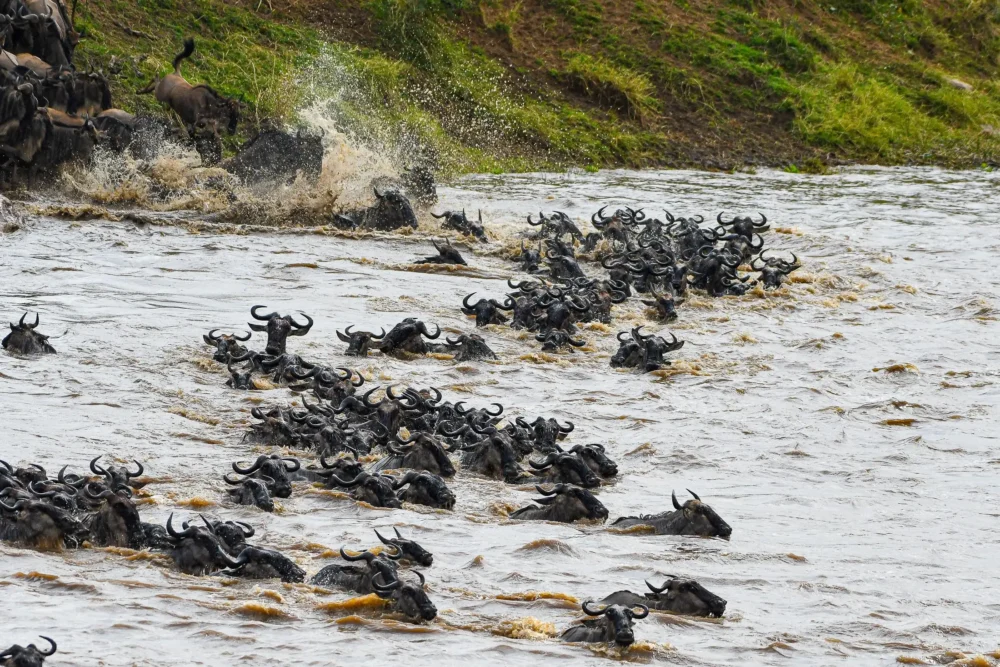
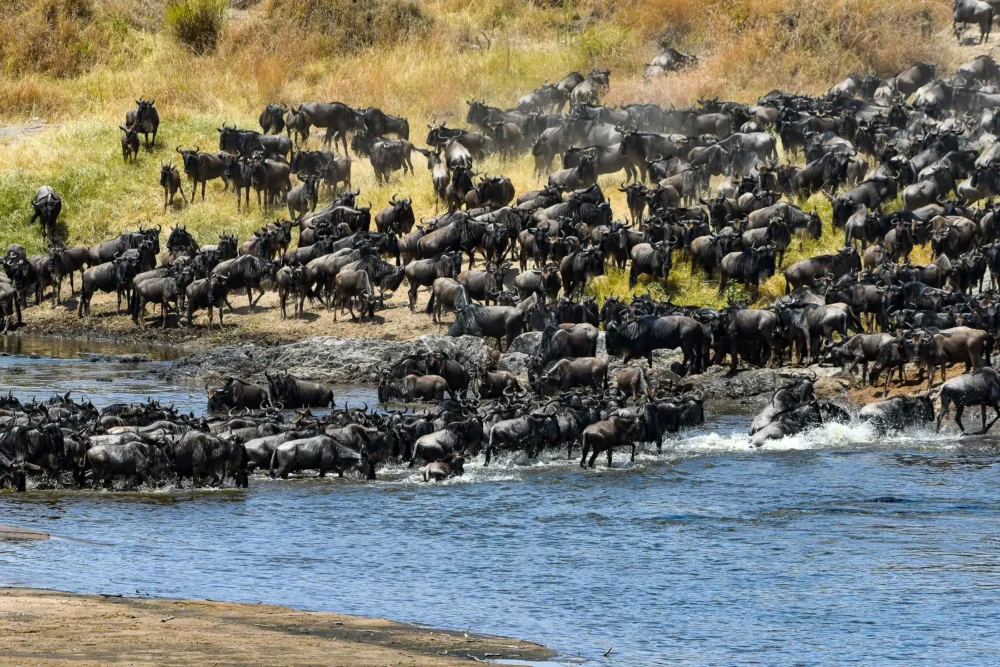
This is the moment most people think of when they hear Great Migration safari. The huge herds reach the northern Serengeti and must cross the Mara River to enter Kenya. The river is deep, fast, and full of very large Nile crocodiles. The wildebeest stand on the bank for a long time, sometimes hours or even days, before one of them jumps in. Then thousands follow all at once.
It is one of the most dramatic wildlife events anywhere in the world. The sound, the dust, the splashing water, the crocodiles attacking, it is impossible to describe how powerful it feels to be there.
July to October is peak season for the Great Migration. Lodges are at their most expensive and book up very fast. We strongly recommend booking your Great Migration safari packages at least 6 to 12 months in advance for this period. Contact us to check availability.
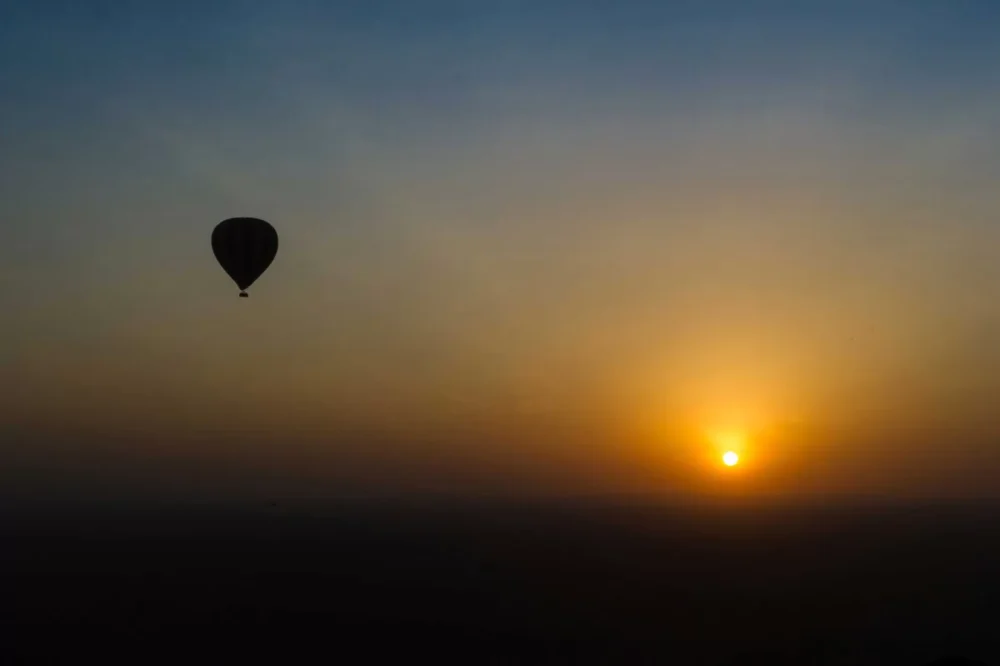
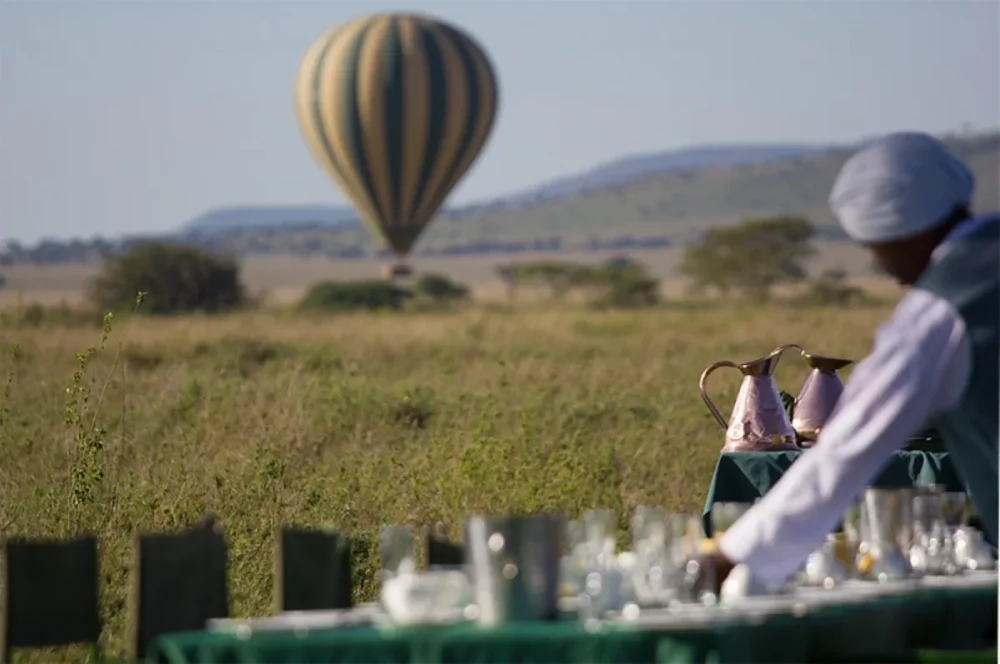
This is also an excellent time to add a hot air balloon safari over the Serengeti. Floating above the plains in the early morning while the herds are below you is something you will never forget.
November and December — Return South (Southern Serengeti)
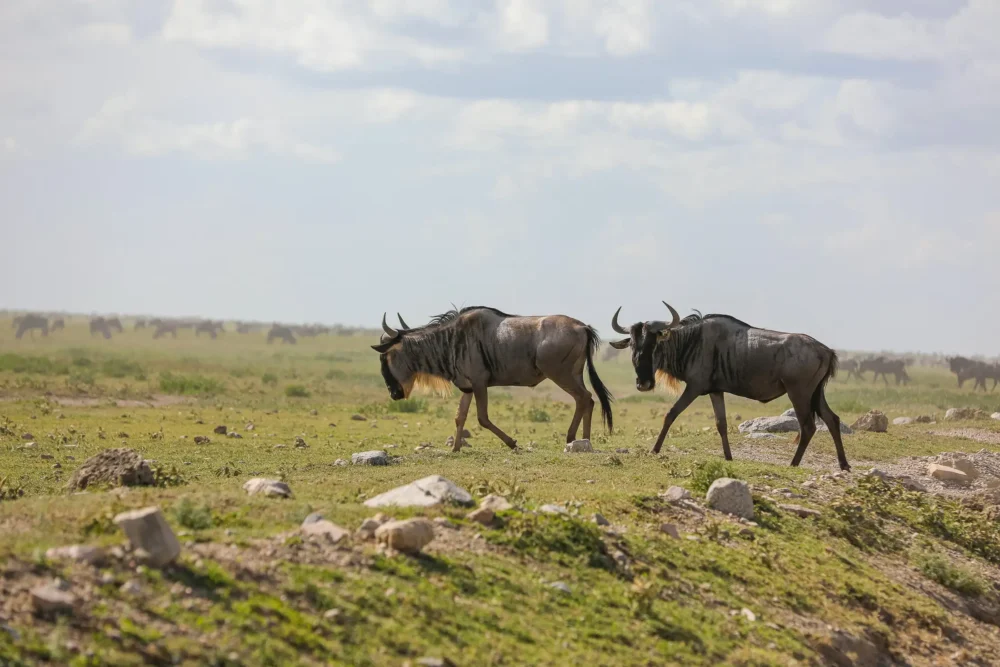
The short rains arrive in November and the herds begin moving south again back towards the southern Serengeti plains. The landscape turns green again and the game viewing is still excellent. There are fewer tourists during this time, which means a quieter and more private safari experience. Prices are also lower than peak season.
December is a great month for migration safari parks are open, the weather is mostly good, and you can often find better value on lodges. This is also a popular time for couples on a Tanzania honeymoon safari who are travelling over the Christmas and New Year period.
Best Places to Stay for a Great Migration Safari
Where you stay on a Great Migration safari makes a huge difference. The best camps are positioned to follow the herds and offer private game drives. Here is a simple guide by area:
Southern Serengeti — Best for Calving Season (January to March)
The Ndutu area in the southern Serengeti is the best place to be during calving season. Look for camps and lodges that are inside or very close to the Ndutu plains. Some of the best options are mobile camps that move with the herds. These small, intimate camps usually have just 8 to 12 tents, private outdoor showers, and evening meals under the stars. They are also wonderful for couples, see our Tanzania honeymoon safari page if you are planning a romantic trip.
Western Corridor — Best for Grumeti Crossings (June to July)
The western corridor of the Serengeti is less visited than the north, which makes it a good choice for couples and travellers who want a quieter, more exclusive experience. Camps here are close to the Grumeti River and offer excellent predator sightings alongside the river crossing action. Some luxury properties here have private plunge pools and are among the most beautiful camps in Tanzania.
Northern Serengeti — Best for Mara River Crossings (July to October)
For the famous Mara River crossings, you need to be in the northern Serengeti, specifically in the area known as Kogatende or Lamai. This is the most in-demand area in all of Tanzania during peak season. The very best camps sit on elevated ground above the river so you can sometimes see the crossings from your tent or camp. Book as early as possible, these camps sell out very fast.
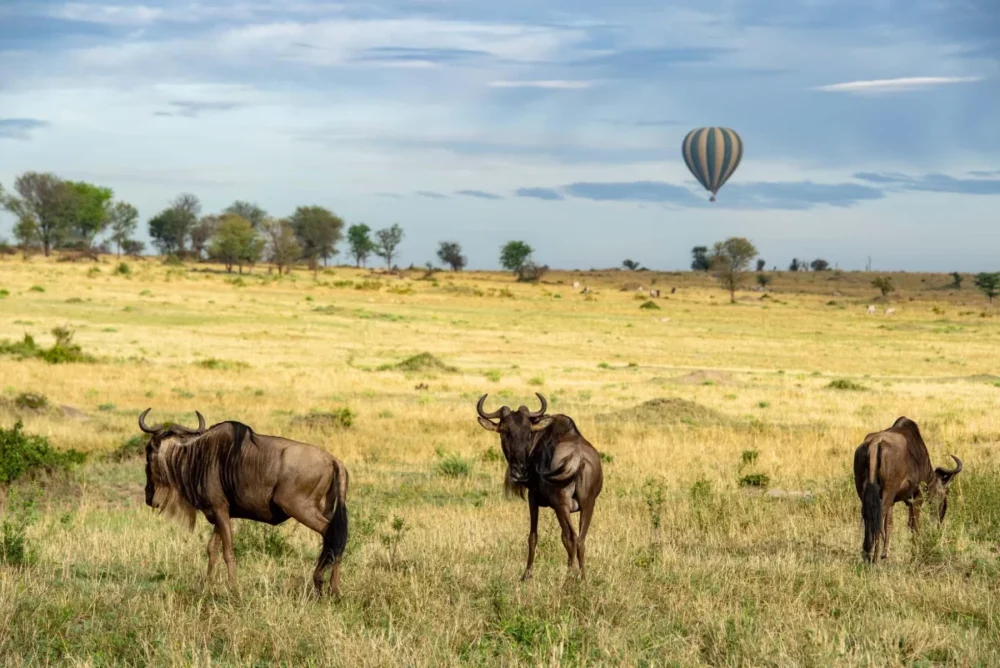
A hot air balloon safari from the northern Serengeti at this time of year is amazing. You fly over thousands of wildebeest at sunrise, it is one of the best things you can do in Africa.
Serengeti Central — Good for Budget and Year-Round Visits
The central Serengeti around Seronera is the most accessible area and works well for year-round game drives. Lodges here are generally more affordable than the north or south. If you are on a tighter budget, our Tanzania budget camping safaris are a great option that still gives you a real and memorable safari experience.
Great Migration Safari Itinerary Ideas

8-Day Great Wildebeest Migration Safari: Witness the Mara River Crossing
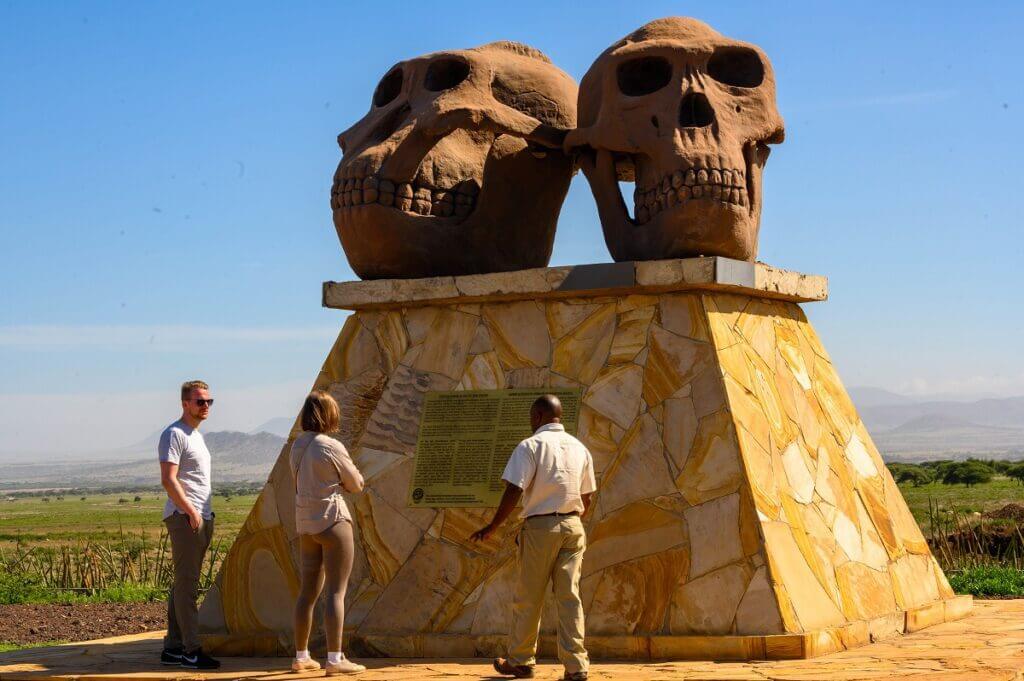
5-Day Ndutu Southern Serengeti Migration Safari: Calving Season (Dec–Apr)
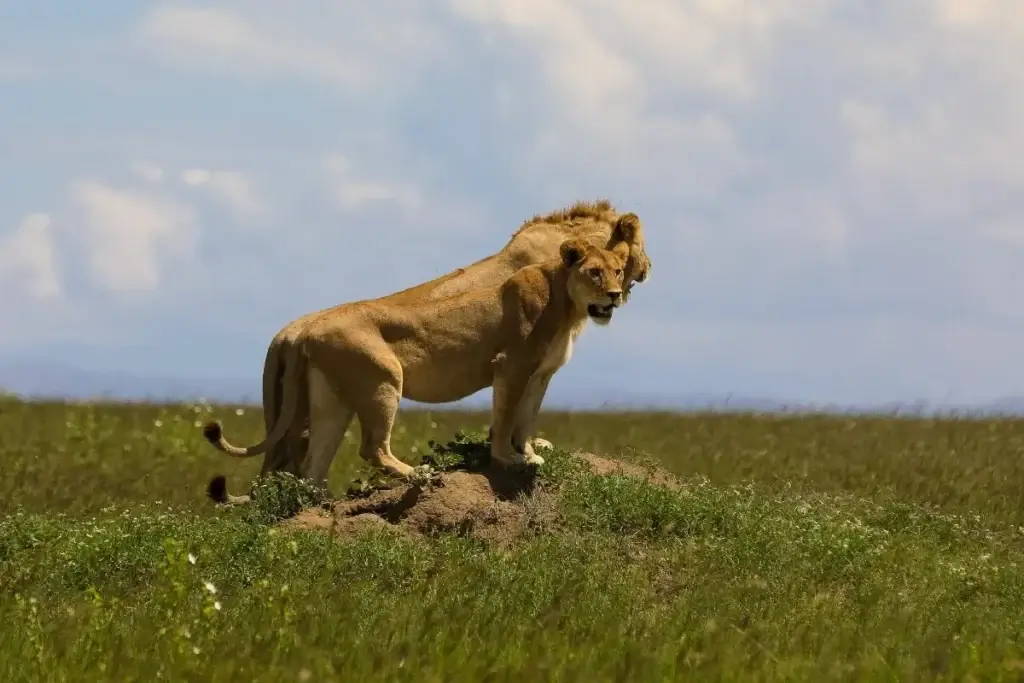
5-Day Ultimate Tanzania Safari, Serengeti and Ngorongoro
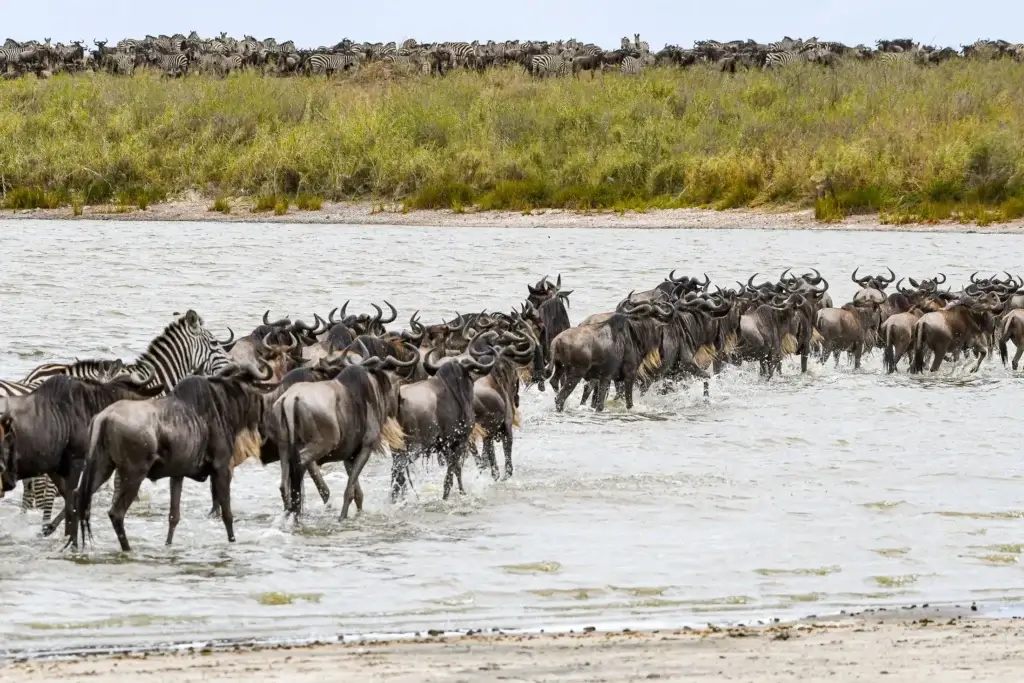
7-Day Great Wildebeest Migration Safari – Serengeti & Mara River crossings
Optional extension: Add 3 nights in Zanzibar for a perfect safari and beach combination. Many couples use this as a Tanzania honeymoon safari and beach package. We can build any version of these itineraries around your travel dates and budget. Get in touch to start planning.
Great Migration Safari Cost — What to Budget
The cost of a Great Migration safari varies a lot depending on the time of year, the type of camp you choose, and how long you stay. Here is a simple guide:
Budget: $2,500 – $5,000 per person (7 days)
This is possible with mid-range lodges, shared game drives, and simple accommodation. It gives you a real and genuine migration safari experience. See our Tanzania budget camping safaris for the most affordable options.
Mid-Range: $5,000 – $10,000 per person (7 days)
At this level you get comfortable private lodges, private game drives, and well-positioned camps near the migration. This is the most popular level for our clients and offers great quality at a fair price. Check our Tanzania safari cost guide to understand what is included.
Luxury: $10,000 – $25,000+ per person (7 days)
Luxury Great Migration safari packages include exclusive camps with private plunge pools, private charter flights between areas, private guides, and the very best positions near the Mara River. For the peak river crossing months of July to October, most luxury camps are fully booked 6 to 12 months in advance.
For a personalised quote, contact us here with your travel dates. We will find the best option at the right price for you.
Expert Tips for Your Great Migration Safari
- Book early for peak season: If you want to see the Mara River crossings between July and October, book your camp 6 to 12 months before you travel. The best camps sell out very fast. This is the most important tip we can give you.
- The crossing time is unpredictable: The wildebeest decide when to cross, nobody can tell you exactly when it will happen. You may watch a crossing on your first morning, or you may wait two or three days. It is part of the magic. Plan to stay at least 3 nights in the north to give yourself a good chance.
- Fly between areas: Tanzania is a big country. Flying between parks saves you many hours on the road and gives you more time for game drives. Ask us to include bush flights in your itinerary.
- Take a hot air balloon: If your budget allows, a hot air balloon safari over the Serengeti is worth every dollar. Floating above the migration at sunrise is a once-in-a-lifetime experience.
- Wear the right clothes: Khaki, green, beige, and brown colors work best on safari. Avoid white or bright colors. Wear light layers, mornings can be cold and afternoons can be warm.
- Bring a good camera: The migration creates photography opportunities like nowhere else on Earth. A camera with a good zoom lens is ideal. Your guide will help you get close to the action.
- Add other parks: Combine your migration safari with stops at Tarangire National Park and Ngorongoro Crater for a complete Tanzania safari experience.
- Sort your visa in advance: Most nationalities need a visa for Tanzania. Apply online through the Tanzania e-visa portal before you travel.
- Consider a Zanzibar extension: After a week on safari, a few days on a white-sand beach in Zanzibar is the perfect way to finish your trip. See our Tanzania safari and beach packages for options.
What to Combine With Your Great Migration Safari
A Great Migration safari in the Serengeti combines very naturally with many other Tanzania experiences. Here are the most popular combinations:
Great Migration + Zanzibar Beach
This is the most popular combination. After a week watching the migration in the Serengeti, fly to Zanzibar for 3 to 4 nights of beach relaxation. It is the perfect contrast, wild bush one week, white sand and clear ocean the next. See our Tanzania safari and beach packages.

Great Migration + Ngorongoro Crater
The Ngorongoro Crater is a natural bowl that holds one of the highest concentrations of wildlife in Africa, including some of the last black rhino in Tanzania. It is just a few hours’ drive from the Serengeti and makes an excellent one or two-night addition to any migration safari.
Great Migration + Tarangire National Park
Tarangire National Park is famous for its massive elephant herds and ancient baobab trees. It sits close to Arusha and is an ideal first or last stop on a northern Tanzania migration circuit. See our full guide to Tanzania safari destinations.
Great Migration + Hot Air Balloon Safari
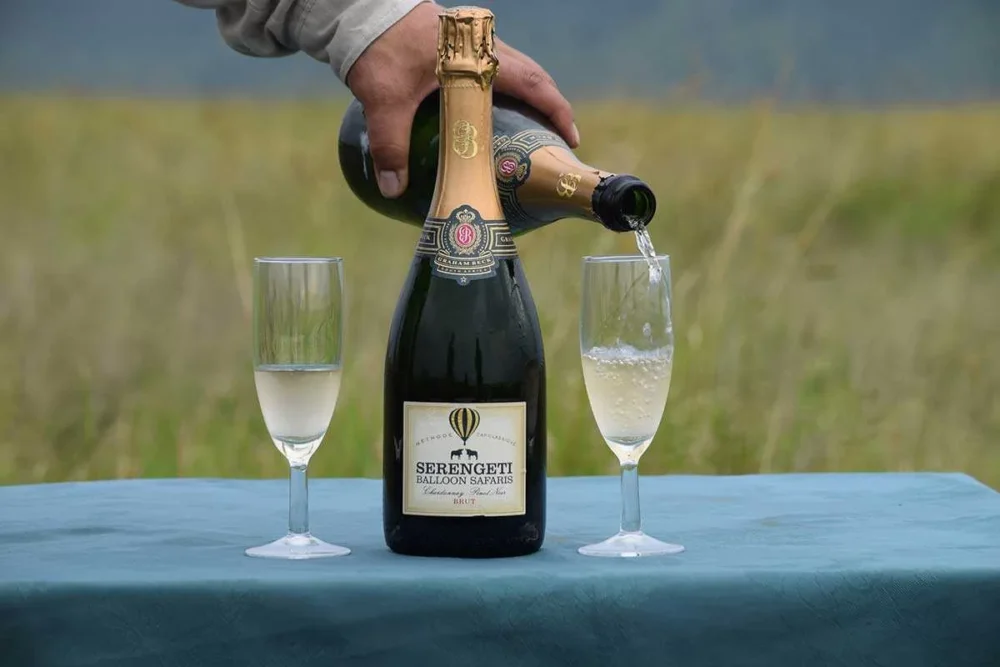
A hot air balloon safari over the Serengeti takes the migration experience to a completely different level. You drift silently over the plains at sunrise, looking down at the herds from above. Afterwards, you enjoy a champagne breakfast served in the bush. It costs extra but it is absolutely worth it.
Great Migration + Tanzania Honeymoon Safari
The Great Migration and a romantic honeymoon safari are a perfect match. Imagine watching thousands of wildebeest cross the Mara River together, then ending the day with a private candlelit dinner under the stars. Read our full Tanzania honeymoon safari guide to see how to combine the migration with a romantic honeymoon trip.
Great Migration + Tanzania Honeymoon Safari
The Great Migration and a romantic honeymoon safari are a perfect match. Imagine watching thousands of wildebeest cross the Mara River together, then ending the day with a private candlelit dinner under the stars. Read our full Tanzania honeymoon safari guide to see how to combine the migration with a romantic honeymoon trip.
Great Migration + Mount Kilimanjaro Climb
For adventurous travellers, combining a Great Migration safari with a Kilimanjaro climb is one of the ultimate Africa experiences. You can climb first and then recover with a safari, or do the safari first and end with the climb. Read our Kilimanjaro climbing guide to learn more about routes, costs, and what to expect.
Great Migration Safari — Common Questions Answered
When is the best time to see the Great Migration in Tanzania?
The best time depends on what you want to see. For the famous Mara River crossings, go between July and October. For the calving season, where thousands of baby wildebeest are born daily — go between January and March. Both are truly spectacular. Read our full Great Migration best time guide for more detail.
Is it guaranteed I will see a river crossing?
No, it is not guaranteed. The wildebeest decide when to cross and nobody can predict exactly when it will happen. However, if you stay in the northern Serengeti for at least 3 nights between July and October, your chances of seeing at least one crossing are very high. Our experienced guides know where to position you for the best chance.
How many days do I need for a Great Migration safari?
We recommend a minimum of 5 nights in the Serengeti to properly experience the migration. 7 nights gives you more flexibility and a better chance of seeing the key events. If you want to combine the migration with other parks like Ngorongoro or Tarangire, add 2 to 3 more nights.
What is the difference between the Serengeti and the Masai Mara for the migration?
Both the Serengeti in Tanzania and the Masai Mara in Kenya are part of the same migration ecosystem. The herds spend most of the year about 9 months in the Serengeti. The Masai Mara crossing window is roughly August to September. Staying in Tanzania gives you more time with the herds and usually better value for money. We focus on the Serengeti side of the migration.
Can I do a Great Migration safari on a budget?
Yes. Budget camping safaris in the Serengeti are available and offer a genuine migration experience at a lower cost. You will sleep in comfortable tents, drive in an open 4×4, and have the same access to the parks as luxury guests. See our Tanzania budget camping safaris for details.
Can I do a Great Migration safari as a family?
Yes. The Great Migration is a wonderful experience for families with children. The wildlife action is exciting and educational for kids of all ages. Many lodges in the Serengeti welcome children and offer family tents and family-friendly activities. See our Tanzania family safari tours for family-specific options.
Is it safe to go on a migration safari in Tanzania?
Yes. Tanzania is one of the safest countries in Africa for tourists. The national parks are well managed, all safari guides are professionally trained and licensed, and the roads between major tourist areas are in good condition. Travel with a reputable company like Exceptional Travel Expert and follow your guide’s advice at all times in the bush.
What should I pack for a Great Migration safari?
Pack light, neutral-coloured clothes (khaki, green, brown, beige), a warm layer for cool mornings and evenings, a good camera with zoom, sunscreen, insect repellent with DEET, and a hat. See our Tanzania travel guide for a more detailed packing checklist.
What is the Great Migration safari cost?
Costs range from around $2,500 per person for a budget migration safari to $25,000+ per person for a luxury experience. The biggest factors are the time of year (peak season July–October is most expensive), the type of accommodation, and the length of your trip. See our Tanzania safari cost guide for a full breakdown.
Plan Your Great Migration Safari Today
The Great Wildebeest Migration is one of the greatest wildlife events on the planet. Whether you want to watch thousands of wildebeest cross a crocodile-filled river, see thousands of baby animals being born on the open plains, or simply spend a week driving through the Serengeti with a cold drink and incredible animals all around you, there is no better place in the world for a safari than Tanzania. At Exceptional Travel Expert, we are a Tanzania-based safari company. We know the Serengeti extremely well and we plan Great Migration safaris every single year. We will help you choose the right time, the right camp, and the right itinerary for your budget and your interests. Get in touch with us today. Tell us when you want to travel and what you want to see, we will do the rest.
📧 info@exceptionaltravelexpert.com
💬 WhatsApp: +255 766 633 052
☎️ Call: +255 626 058 246
Disclaimer: Some images on this page are the property of Essque Zalu Zanzibar Hotel, Serengeti Balloon Safaris. All rights belong to their respective owners.