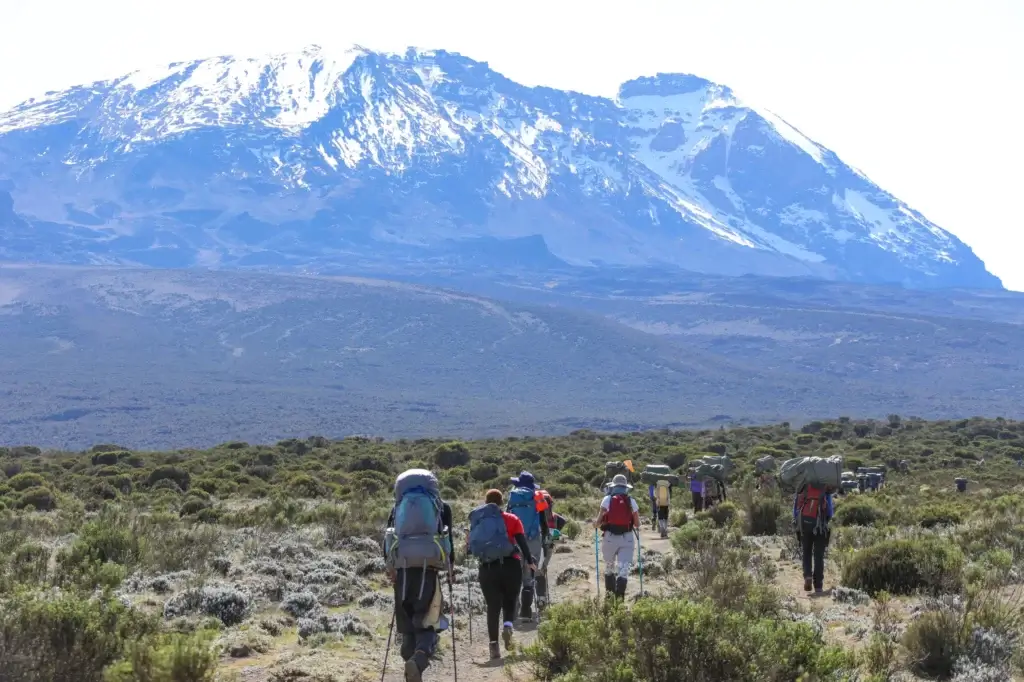
7-Day Kilimanjaro Climb, Rongai Route

Tour Overview

The 7-day Rongai Route is the only route that starts on the northern side of Mount Kilimanjaro, near the Kenyan border. This remote region sees far fewer trekkers than the busy southern and western slopes, making it an ideal choice for those who value quiet, uncrowded hiking experiences. The drive to the trailhead at Nalemuru Gate typically takes 3 to 4 hours from your hotel in Arusha or Moshi.

Rongai route is also the only route that passes close to Mawenzi, Kilimanjaro’s rugged volcanic cone and the third-highest peak in Africa. On the descent, you’ll return via the Marangu Route, giving you the rare opportunity to experience both sides of the mountain in one journey.

While both 6-day and 7-day itineraries are available, we strongly recommend the 7-day option for better acclimatization and a more relaxed pace.

7-Day Kilimanjaro Climbing, Rongai Route Itinerary

Day 1: Arrival Day ( Moshi )

Arrive at Kilimanjaro International Airport (JRO) where our team will meet you and transfer you directly to The Maridadi Hotel in Moshi. The rest of the day is yours to relax, explore Moshi town, and prepare your gear for the climb ahead. One of our experienced guides will visit you at the hotel for a pre-climb briefing, a kit check, and to answer any last-minute questions. Overnight at The Maridadi Hotel, Moshi.
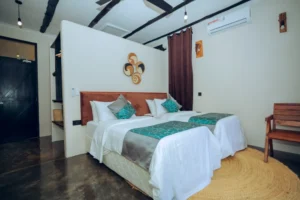
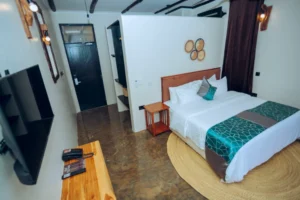
The Maridadi Hotel, Mosh
Day 2: Nalemoru Gate (1,990 m) to Simba Camp (2,570 m)

Distance: 8 km

Hiking Time: About 4 hours

Habitat: Tropical rainforest

Meals: Breakfast, lunch, and dinner

Accommodation: Camping in tents

Your Kilimanjaro adventure begins today. In the morning, your guide and mountain crew will meet you at the hotel for a short briefing and gear check. Then you’ll drive to the northern entrance of Kilimanjaro National Park, Nalemoru Gate, where park registration and permit formalities are completed.

From there, you’ll begin your gentle ascent through the lush rainforest, walking at a relaxed pace along the northern slope of the mountain. The trail winds through quiet coniferous forest, offering a peaceful start to your journey.

By the time you arrive at Simba Camp, your crew will have already set up your tents and started preparing a warm dinner.

Please Note: Take your time today and enjoy the calm rhythm of the forest. The climb is just beginning, and your body will thank you for a slow, steady start.

Day 2: Simba Camp (2,570 m) to Second Cave Camp (3,450 m)

Distance: 5 km

Hiking Time: About 3 hours

Habitat: Moorland

Meals: Breakfast, lunch, and dinner

Accommodation: Camping at Second Cave Camp

After breakfast, you’ll continue your trek as the forest gives way to open moorland terrain. The trail is gentle and scenic, with stunning views of Kibo’s summit and the eastern ice fields near the crater rim.

Today’s hike is short and steady, allowing you to walk at a relaxed pace and enjoy the changing landscape. You’ll arrive at Second Cave Camp (3,450 m) by early afternoon, where your crew will have your tents ready and dinner underway.

Please Note: This is a great day to slow down, hydrate well, and take in the views. The altitude is rising steadily, so your body will appreciate the easy pace and early rest.

Day 3: Second Cave Camp (3,480 m) to Kikelelwa Camp (3,630 m)

Distance: 5 km

Hiking Time: About 3 hours

Habitat: Moorland

Meals: Breakfast, lunch, and dinner

Accommodation: Camping at Kikelelwa Camp

After breakfast, you’ll continue your journey across the moorland zone, following a shorter route that gradually climbs toward the dramatic Mawenzi Peaks (5,140 m). The views of Kibo, Kilimanjaro’s tallest volcanic cone, and the eastern ice fields are especially striking today.

The hike is gentle and scenic, taking about 3 hours to reach Kikelelwa Camp, where you’ll enjoy lunch and settle in for the night. The camp sits in a quiet valley with sweeping views, perfect for rest and reflection.

Please Note: This is a great day to enjoy the changing terrain and take in the mountain’s grandeur. You’re gaining altitude steadily, so keep a relaxed pace and stay hydrated.

Day 4: Kikelelwa Camp (3,630 m) to Mawenzi Tarn Hut (4,330 m)

Distance: 8 km

Hiking Time: About 4 hours

Habitat: Semi-desert

Meals: Breakfast, lunch, and dinner

Accommodation: Hut at Mawenzi Tarn

Today’s trek is short but steep, as you climb steadily up grassy slopes toward the rugged beauty of Mawenzi Peak. The trail opens up to wide, panoramic views and a deep sense of wilderness as you enter the semi-desert zone.

Your destination is Mawenzi Tarn Hut, nestled in a dramatic rocky cirque directly beneath the towering spires of Mawenzi. After arriving, you’ll have the afternoon free to rest or explore the surrounding area, which helps with acclimatization.

Please Note: This is a great day to slow down and absorb the mountain’s raw beauty. The altitude is rising quickly, so take it easy and enjoy the peaceful rhythm of the highlands.

Day 5: Mawenzi Tarn Hut (4,330 m) to Kibo Hut (4,700 m)

Distance: 8 km

Hiking Time: About 5 hours

Habitat: Alpine desert

Meals: Breakfast, lunch, and dinner

Accommodation: Hut at Kibo Camp

Today you’ll cross the wide, barren landscape known as the Saddle—a high-altitude desert between Mawenzi and Kibo, Kilimanjaro’s tallest volcanic cone. The terrain feels almost lunar, with dry air and vast open views.

After about 5 hours of trekking, you’ll arrive at Kibo Hut, your base camp for the summit attempt. The afternoon is reserved for rest, hydration, and a warm lunch, as you prepare mentally and physically for the midnight ascent to Uhuru Peak.

Please Note: This is a quiet, reflective day. Conserve your energy, stay warm, and focus on the goal ahead. Tomorrow is summit day, the moment you’ve been working toward.

Day 6: Summit Day – Kibo Hut to Uhuru Peak (5,895 m), then down to Horombo Hut (3,720 m)

Distance: 22 km

Hiking Time: About 13 hours

Meals: Breakfast, lunch, and dinner

Accommodation: Hut at Horombo Camp

Summit day begins just after midnight, as you leave Kibo Hut under a starlit sky. This is the most demanding part of the trek, with a steep and steady climb. Your guide will set a slow, consistent pace to help you conserve energy and adjust to the altitude.

After about 5 hours, you’ll reach Gilman’s Point (5,685 m) on the crater rim, just in time to witness a spectacular sunrise over Mawenzi Peak. You’ll pause here briefly for tea and rest before continuing for another hour to Uhuru Peak (5,895 m), the highest point in Africa.

Along the way, you’ll pass near glaciers and ice cliffs that still crown the summit. Once at the top, take photos, celebrate, and soak in the moment, you’ve made it!

Afterward, you’ll descend back to Kibo Hut for a warm lunch and short rest. Then you’ll continue down to Horombo Hut, where you’ll spend your final night on the mountain.

Please Note: This is a long and emotional day. Dress warmly, stay hydrated, and take it one step at a time. Reaching Uhuru Peak is a life-changing achievement, this is your summit story.

Day 7: Horombo Hut (3,720 m) to Marangu Gate (1,860 m) to Hotel in Moshi

Distance: 20 km

Hiking Time: About 7 hours

Meals: Breakfast and lunch

Accommodation: No overnight stay,  transfer to hotel after descent

Your final day on Kilimanjaro begins with a scenic descent from Horombo Hut, passing through the heath and moorland zone. After a few hours of trekking, you’ll stop at Mandara Hut (2,700 m) for a warm lunch and a well-earned break.

From there, the trail continues downhill through the lush tropical rainforest, leading you back to Marangu Gate, the official exit point of Kilimanjaro National Park. Here, you’ll complete park formalities and receive your summit certificate, a proud reminder of your achievement.

After your descent and transfer from Marangu Gate, you will be driven back to The Maridadi Hotel in Moshi. Tonight is yours to celebrate your achievement—enjoy a hot shower, a well-earned meal, and a comfortable bed after six days on the mountain. Our team will assist with any onward arrangements.
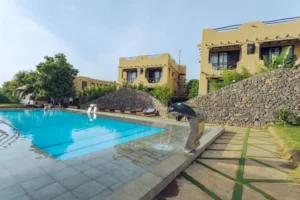
The maridadi hotel
The Maridadi Hotel, Moshi

Please Note: This is a joyful and emotional day. Take your time, enjoy the forest scenery, and celebrate every step of your success.

End of Trip (7-Day Kilimanjaro Climb, Rongai Route)

Your 7-day Rongai Route climb concludes with a safe descent and a comfortable transfer back to your hotel in Arusha or Moshi. Reaching the summit of Mount Kilimanjaro, the highest point in Africa, is a truly extraordinary achievement, and we’re honored to have guided you every step of the way.

Thank you for choosing to climb with us. May the memories of your journey across Kilimanjaro’s quiet northern slopes and dramatic summit stay with you always, and may the spirit of the mountain continue to inspire your path ahead.
7 Day Kilimanjaro Climb Rongai Route – Cost Per Person (USD)
1 Pax2 Pax3 Pax4 Pax5 PaxNumber of People
$3,690$2,510$2,460$2,100$1,902Price Per Person
Trip Essentials
Here are some important things to know and prepare before your climb. These tips will help you stay safe, respectful, and ready climb Mount Kilimanjaro with a full confidence.
Recommended Gear to RentSleeping bag (rated for -10°C), trekking poles, waterproof duffel, gaiters, headlamp
Health & Altitude TipsAcclimatize slowly, drink 3–4L water daily, carry Diamox if needed, avoid alcohol
Visa & Entry InfoTourist visa required for most nationalities; available online or on arrival at airport
Local EtiquetteGreet with “Jambo,” dress modestly in towns, tipping guides/porters is customary
Photo TipsCapture sunrise at Stella Point, wide shots at Shira Plateau, and summit flags at Uhuru Peak
Climbing Gear Add-ons
If you're interested in gear add-ons, please let us know in advance so we can prepare everything before your climb.
Add-onPrice (USD)
Private Toilet$150
Private Tent$7/day
Kailas X3 III Alpine Tent with Vestibule$12/day
Thicker Sleeping Mattress (4-inch foam)$10
Thermosets$17
Transportation & Tipping Guidelines
We offer airport pickup and drop-off services from Kilimanjaro International Airport (JRO) or Arusha Airport. Please confirm your flight details in advance so we can coordinate your arrival and departure smoothly.
Airport PickupAvailable on request
Transfers to/from HotelIncluded in most packages
Private Vehicle UpgradesAvailable for an extra charge
Tipping is customary and greatly appreciated by the crew. Below are suggested amounts based on group size and duration.
Lead Guide$20–25 per day
Assistant Guide$15–20 per day
Cook$10–15 per day
Porter$8–10 per day
Tips are usually collected and distributed at the end of the trek. You can give them in cash (USD or Tanzanian Shillings) or through a group representative.

Inclusions

What's Included in The Price

What's Not Included in The Price

7-Day Kilimanjaro Climb, Rongai Route

Group size: 1–12 climbers


$2,510 (USD) Per Person

Includes 1 night pre-climb and 1 night post-climb hotel accommodation at The Maridadi Hotel, Moshi.

What's included in this price Request a Free Quote

Private or group departures available

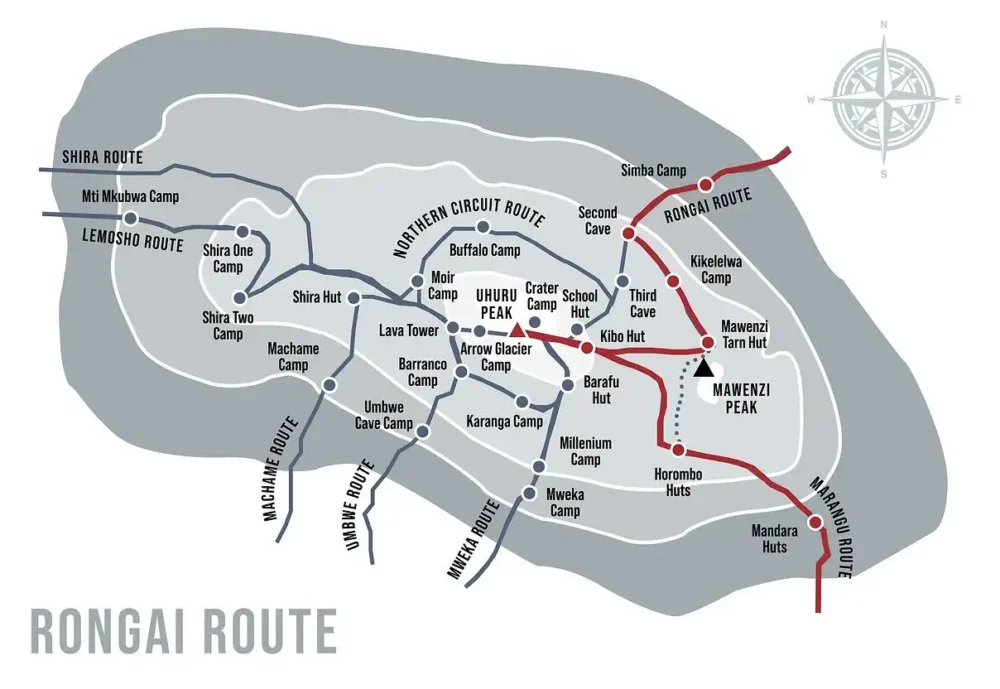
Rongai Route map showing the 7-day trail, camps, and elevation profile on Kilimanjaro, Tanzania
7 Day Kilimanjaro Climb Rongai Route Map – Trail, Camps & Elevation Profile
Essential Trek Information
Route NameRongai Route
Duration7 Days / 6 Nights
Distance~73 km (45 miles)
Daily Hiking5–7 hrs/day (longer on summit day)
Elevation Range2,000 m – 5,895 m (Uhuru Peak)
Climate ZonesDry forest → Moorland → Alpine Desert → Arctic
Difficulty⬛⬛⬛⬜⬜ Moderate
Summit Success RateHigh — ~85–90%
Minimum Age10 years
AccommodationCamping in tents
Summit Start TimeMidnight from Kibo Camp
Route TypeAscent via Rongai, descent via Marangu
Extra Trip Information
Best SeasonJan–Mar & Jun–Oct
AccommodationCamping in tents
MealsBreakfast, lunch & dinner
Guide & CrewProfessional guides, cooks & porters
Start PointRongai Gate (2,000 m)
End PointMarangu Gate (1,800 m)
Airport TransferIncluded
IncludesPark fees, tent accommodation, meals, guides
ExcludesFlights, visas, tips, personal gear

What Our Climbers Say

We typically reply within 2 hours

Request a Free Quote

Kilimanjaro booking form

Ready to Climb Kilimanjaro in 2026?

Speak to our Kilimanjaro climbing specialist and start planning your 6-day Machame Route adventure today. We respond within 2 hours.

Tanzania Travel Guide

Other Kilimanjaro Routes to Consider in 2026/2027

Looking for a different routes to climb Kilimanjaro? There are several routes to choose from. Each one offers its own views, pace, and experience. Some are quieter, some give more time to adjust to the altitude, and some are quicker to the summit. You can pick the route that fits your style best. Here are a few other popular options that many guests enjoy.

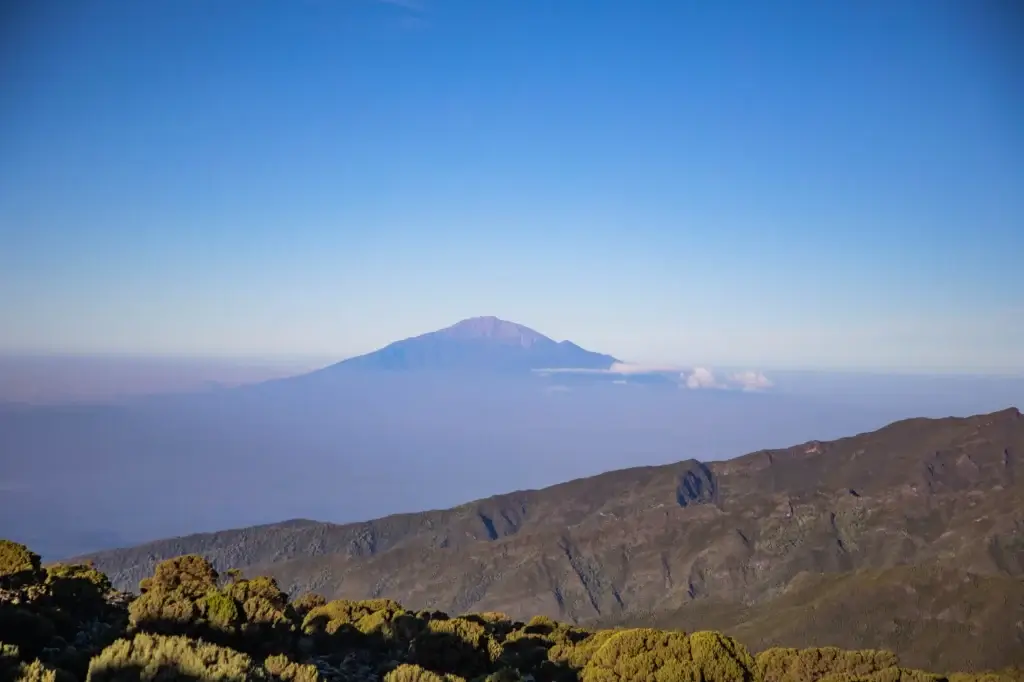
Trekkers ascending through dense rainforest near Umbwe Gate on Day 4 of the climb
from $1,448 to $2,044 Per Person

6-Day Kilimanjaro Climb – Umbwe Route
Route: Umbwe Route • 6 days
View Package Details
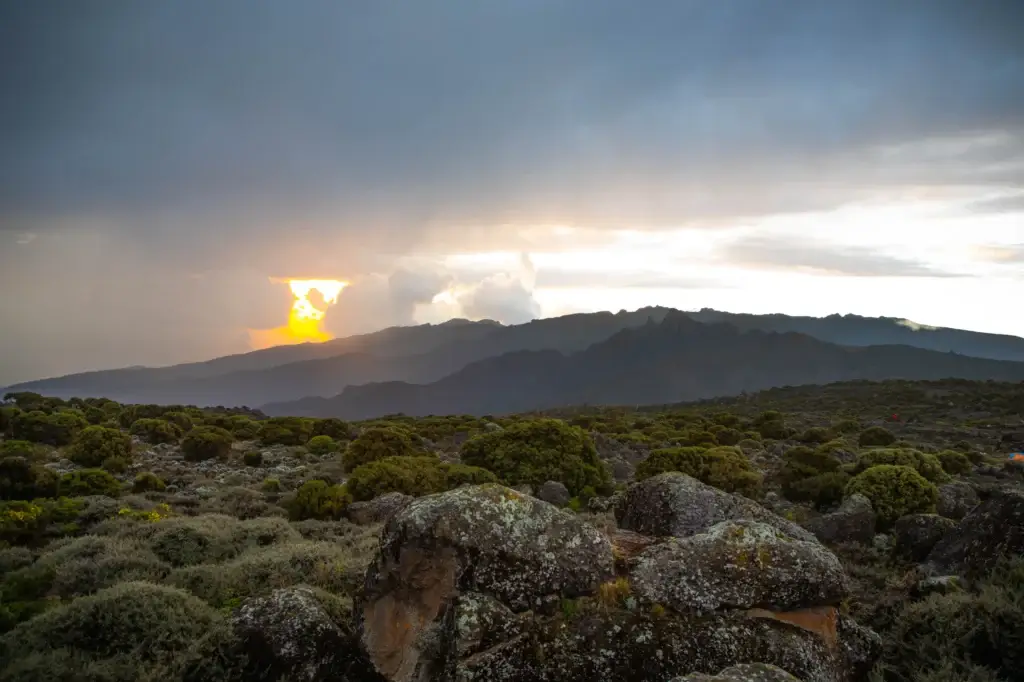
Golden sunset over Kikelewa Camp with mountain silhouettes in the background
from $1,448 to $2,043 Per Person

6-Day Kilimanjaro Climb – Rongai Route
Route: Rongai Route • 6 days
View Package Details
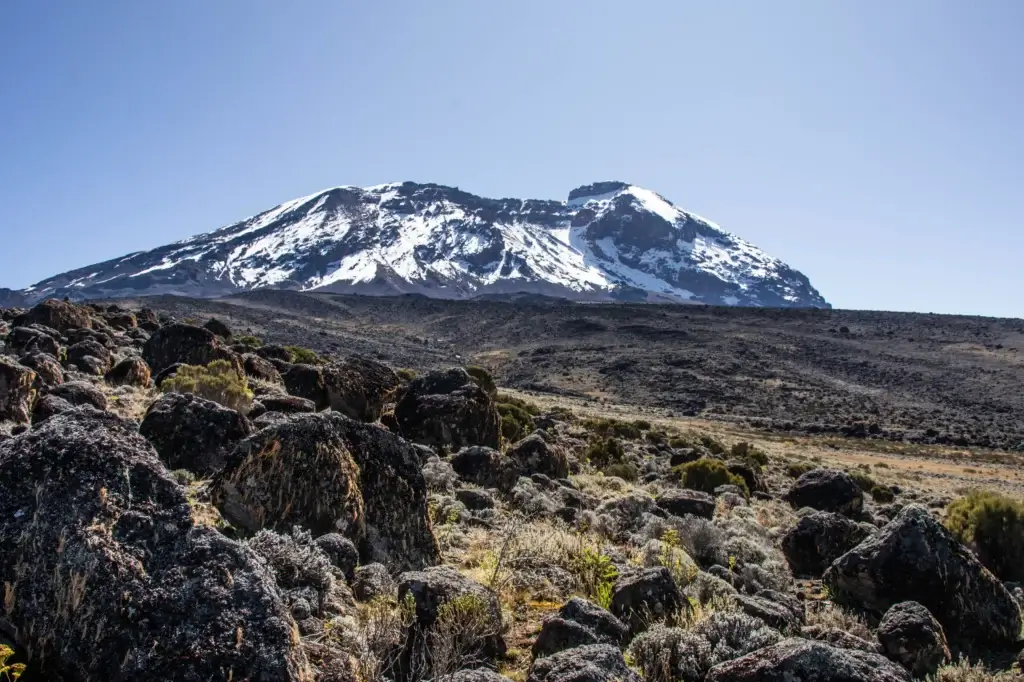
rekkers climbing toward Mawenzi Tarn with Mawenzi Peak in view
from $1,671 to $2,305 Per Person

7-Day Kilimanjaro Climb – Rongai Route
Route: Rongai Route • 7 days
View Package Details
Climbers trekking toward Kibo Hut on 5--Day Kilimanjaro Climb Marangu Route
from $1,220 to $1,592 Per Person

5-Day Kilimanjaro Climb – Marangu Route
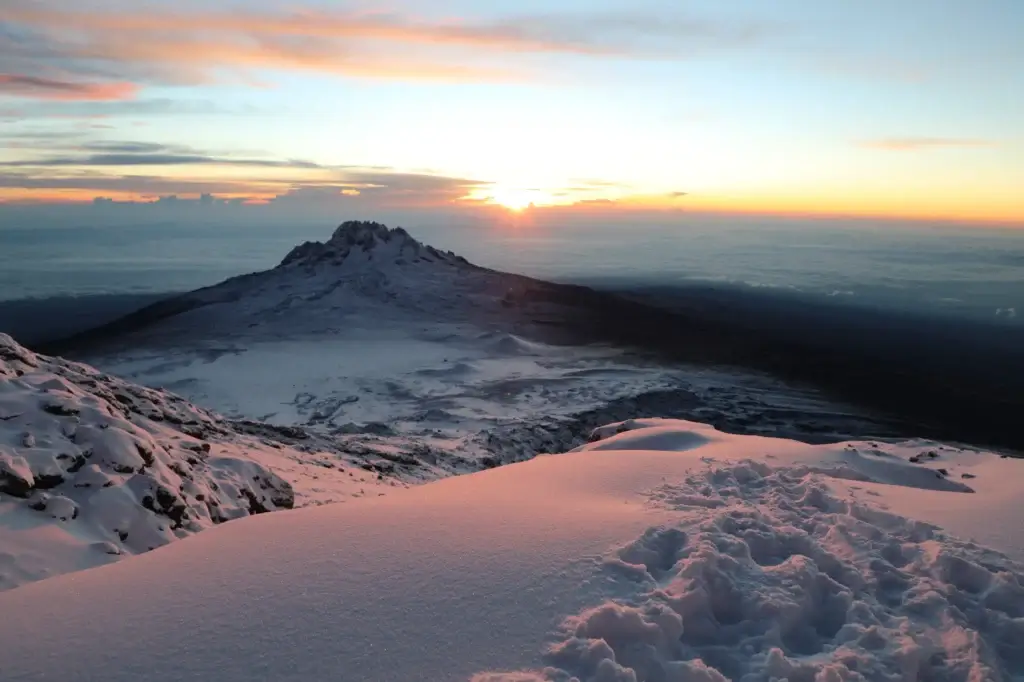
Route: Marangu Route (Coca-Cola Route) • 5 days
View Package Details
Clear view of Mawenzi Peak from the Marangu Route near Horombo Camp
from $1,410 to $1,836 Per Person

6-Day Kilimanjaro Climb – Marangu Route
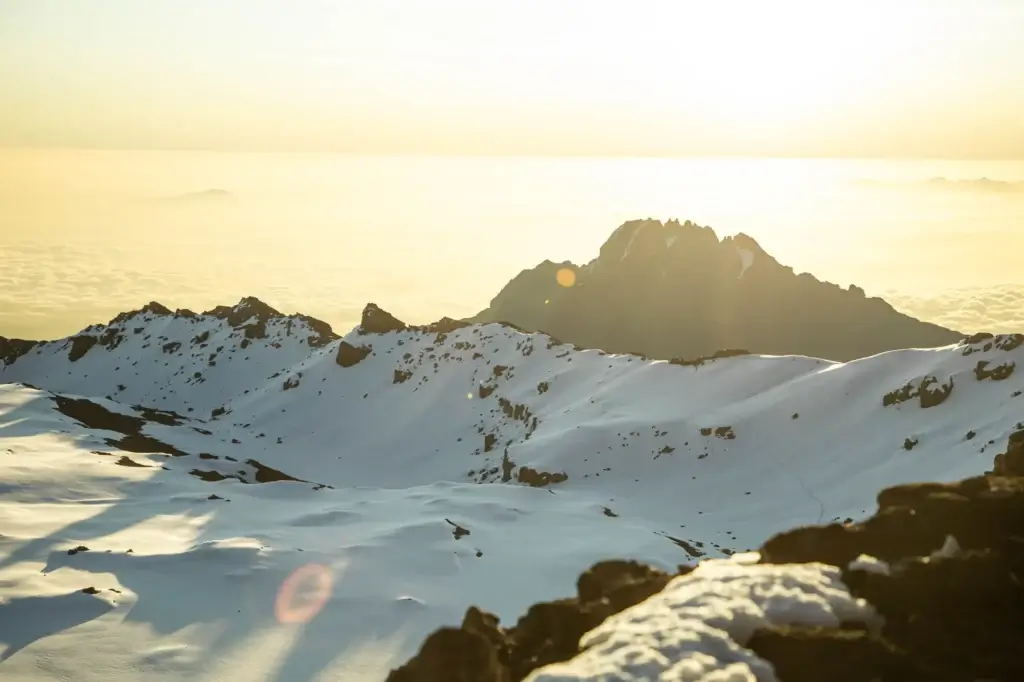
Route: Marangu Route (Coca-Cola Route) • 6 days
View Package Details
8-Day Kilimanjaro Climb, Lemosho Route. Sunrise at Stella Point
from $1,890 to $2,620 Per Person

8-Day Kilimanjaro Climb – Lemosho Route

Route: Lemosho Route • 8 days
View Package Details

Ready to Climb Kilimanjaro in 2026/2027? Speak to our Kilimanjaro climbing specialist today and start planning your 7-day Rongai Route climb. Whether you are traveling solo, as a couple, or in a group, we will build the perfect itinerary around your dates, fitness level, and budget.

Send your inquiry now, and our team will reach out within 2 hours. Let’s get you to Uhuru Peak.

Maro Tanzania Safari Specialist
Maro | Kilimanjaro Climbing Specialist

FAQs

7-Day Kilimanjaro Rongai Route — Frequently Asked Questions

FAQ: GET ANSWERS

The Rongai Route is the only route that approaches Kilimanjaro from the north, starting near the Kenyan border at Rongai Gate (1,950 m). This northerly approach makes it fundamentally different from all other Kilimanjaro routes, which begin on the wetter southern and western slopes. Because the north side of Kilimanjaro lies in a rain shadow, the Rongai Route is significantly drier and warmer than routes like Machame, Lemosho, or Marangu — making it the preferred option during the rainy seasons (April–May and November). The route is also notably quieter and more remote, offering a genuine wilderness experience with frequent sightings of wildlife including elephant, buffalo, and colobus monkeys in the lower forest zone. It is widely regarded as one of the most scenic and serene routes on the mountain.

Day 1: Drive from Moshi to Rongai Gate (1,950 m) and trek through pine forest to Simba Camp (2,625 m) — approximately 7 km, 3–4 hours. Day 2: Hike through open moorland to Second Cave Camp (3,450 m) — 8 km, 4–5 hours. Day 3: Trek to Kikelewa Camp (3,630 m) with an optional acclimatization hike toward Mawenzi Tarn (4,330 m) — 4 km, 3–4 hours. Day 4: Ascend to Mawenzi Tarn Camp (4,330 m) for a full acclimatization day — 4 km, 3–4 hours. Day 5: Cross the saddle plateau between Mawenzi and Kibo and ascend to Kibo Hut (4,700 m) — 9 km, 4–5 hours. Day 6: Midnight summit push from Kibo Hut via Gilman’s Point (5,681 m) to Uhuru Peak (5,895 m), descend to Horombo Hut (3,720 m) — 10–12 hours total. Day 7: Descend to Marangu Gate (1,860 m) and transfer to Moshi — 20 km, 5–6 hours.

The 7-day Rongai Route is generally rated as moderate in difficulty — it is considered one of the more manageable Kilimanjaro itineraries, making it a popular choice for first-time high-altitude trekkers. The northern approach involves gentler gradients than the Machame or Umbwe routes, and there are no technical scrambles like the Barranco Wall. The most demanding section is the summit day approach from Kibo Hut: climbers ascend a steep scree slope in the dark and cold, reaching Gilman’s Point on the crater rim before continuing to Uhuru Peak. The 7-day format provides an important extra acclimatization day at Mawenzi Tarn Camp (4,330 m) compared to the 6-day variant, meaningfully improving both summit success rates and overall comfort.

The total cost for a 7-day Rongai Route trek ranges from approximately $2,100 to $4,800 USD per person, depending on operator quality, group size, and inclusions. TANAPA park fees — which include conservation, rescue, and camping charges — account for roughly $850–$1,000 USD of that total and are typically included in the package price. Budget operators generally charge $2,100–$2,900 USD, mid-range operators $2,900–$3,800 USD, and premium operators $3,800–$4,800+ USD. Always confirm what is included: transfers, accommodation in Moshi before and after the climb, gear hire, and crew gratuities are common variables. Tipping your crew (guides, porters, cook) is not included in any operator’s quoted price — budget an additional $200–$300 USD per climber. The Rongai Route’s longer transfer from Moshi (approximately 2.5–3 hours to the gate) may slightly increase costs compared to southern routes.

The Rongai Route’s greatest advantage over other Kilimanjaro routes is its year-round suitability. Because it approaches from the north — in the rain shadow of the mountain — the Rongai Route remains relatively dry even during Kilimanjaro’s rainy seasons. This makes it the top recommendation for climbers planning a trek in April, May, or November when southern routes like Machame and Lemosho are at their wettest and most difficult. For the best overall weather and clearest skies, the main dry seasons of January–March and June–October still apply and are ideal. July, August, and September see the highest traffic, so climbers seeking solitude may prefer the January–March window or even the shoulder months of April and November when the route is at its quietest.

FAQ: GET ANSWERS

The Rongai Route’s drier, cooler northern climate means you are less likely to encounter heavy rain but more likely to experience significant cold and wind, especially on the saddle and at Kibo Hut. Essential gear includes: fully waterproof and broken-in hiking boots; a sleeping bag rated to at least -10°C (the route descends via Marangu huts but you still need your sleeping bag); moisture-wicking base layers; a mid-layer fleece or down jacket; a waterproof shell jacket and trousers; warm hat, balaclava, and gloves with liners; glacier glasses or goggles for summit day; a headlamp with lithium batteries; trekking poles; a 35–40L daypack; and high-SPF sunscreen and lip balm. Your main porter duffel should not exceed 15 kg. Gear hire is available in Moshi if needed, though bringing your own boots and sleeping bag is strongly advised.

The 8-day Lemosho Route is specifically structured to minimize altitude sickness through a ‘climb high, sleep low’ acclimatization strategy — most famously on Day 4 when climbers ascend to Lava Tower (4,642 m) then descend to sleep at Barranco Camp (3,950 m). To further reduce risk: stay well hydrated (3–4 liters of water per day), ascend slowly (‘pole pole’ — Swahili for ‘slowly slowly’), eat carbohydrate-rich meals, avoid alcohol and sleeping pills, and inform your guide immediately if you experience headache, nausea, or dizziness. Many climbers use Diamox (acetazolamide) as a prophylactic — consult your doctor before departure. If symptoms worsen, descent is the only reliable cure.

The 7-day Rongai Route carries an estimated summit success rate of 80–88%, placing it among the stronger-performing Kilimanjaro itineraries. The extra acclimatization day at Mawenzi Tarn Camp (4,330 m) — unique to the 7-day version — gives climbers a meaningful physiological advantage over the 6-day Rongai format, which sits closer to 65–75%. The summit approach from Kibo Hut via Gilman’s Point follows a direct scree slope rather than the southern circuit’s longer trail, meaning summit day is shorter in distance but very steep — mental preparation and steady pacing are key. Climbers who train adequately beforehand, ascend slowly, stay well hydrated, and listen to their guides consistently achieve the best personal outcomes on this route.

The 7-day Rongai Route’s acclimatization profile is one of its strengths. The gradual northern approach gains altitude more gently than steeper southern routes, and the dedicated acclimatization day at Mawenzi Tarn Camp (4,330 m) on Day 4 uses the ‘climb high, sleep low’ principle — climbers hike higher during the day then return to a lower sleeping altitude to aid red blood cell production. To prevent altitude sickness (AMS), follow the ‘pole pole’ (slowly slowly) pace your guide sets, drink 3–4 litres of water daily, eat carbohydrate-rich meals, and avoid alcohol. Report any persistent headache, nausea, loss of appetite, or dizziness to your guide immediately. Many climbers use Diamox (acetazolamide 125–250 mg twice daily) as a prophylactic — consult your doctor 4–6 weeks before departure. If symptoms worsen at any point, descent is the only reliable treatment.

Yes — the Rongai Route is consistently recommended as one of the best options for first-time Kilimanjaro trekkers. Its gentler gradients, drier climate, and less crowded trails make it more forgiving than the busier southern routes. The absence of technical scrambles like the Barranco Wall reduces intimidation for novice climbers, and the quieter camps allow for better rest and recovery. The 7-day format provides crucial extra acclimatization time compared to shorter options. That said, no Kilimanjaro route is easy — the altitude alone makes it a serious undertaking regardless of experience level. First-timers should build a solid fitness base (begin training 4–6 months out), invest in quality gear especially footwear and a warm sleeping bag, and choose a reputable, licensed operator with experienced KINAPA-certified guides.

Scroll to Top